
 Deutsch
 English
 Français
 Español
 Italiano
 Nederlands
 Português
 Slovenčina
 Hrvatski
 Slovenščina
 Lietuvių
 Eesti
Eesti Български
Reverse

Obverse

Spain · UNESCO World Heritage series, 4th issue, Monastery of San Lorenzo de El Escorial
Issue date1 Mar 2013
Total mintage4,000,000
EU maximum8,000,000
Editions9
Edge lettering2 ★ ★ × 6, alternating upright/inverted
InscriptionESPAÑA / 2013
DesignerAlfonso Morales Muñoz
mintFábrica Nacional de Moneda y Timbre / · Real Casa de la Moneda, Madrid
Issue occasion
The commemorative coin is dedicated to the monastery of San Lorenzo de El Escorial as a UNESCO World Natural and Cultural Heritage Site. The design shows a view of the monastery, with the inscription “ESPAÑA” in an arch above it, and the year of issue and mint mark below it on the right.
The design
The coin’s inner section depicts a view of the Monastery of San Lorenzo de El Escorial, above which the name of the issuing country — “ESPAÑA” — appears in an arc in capital letters, with the year of issue — “2013” — and the mint mark below it to the right.
The outer ring of the coin features the twelve stars of the European flag.
The outer ring of the coin features the twelve stars of the European flag.
Background on the topic
El Escorial is located northwest of Madrid at the foot of the Sierra de Guadarrama. King Philipp II commissioned the construction of the extensive complex from 1563 onward. The work was initially directed by Juan Bautista de Toledo and, after his death, continued primarily by Juan de Herrera. Construction was essentially completed in 1584. The clear geometric layout, largely unadorned façades and use of granite shaped the architectural style named after Herrera, known as *Herrerianismo*.
The complex combines several functions: it was a royal residence, monastery, basilica, educational institution, library and burial place. The religious community living there originally belonged to the Hieronymites; today, the monastery is cared for by Augustinians. Philipp II used El Escorial at times as his seat of government. The building thus closely linked the Spanish monarchy with the Catholic faith and the Counter-Reformation.
The dedication to Saint Lawrence is associated with the Battle of Saint-Quentin in 1557. The Spanish victory fell on the saint’s feast day. According to tradition, Lawrence was tortured to death on a gridiron. For this reason, the ground plan of El Escorial is also often interpreted as an allusion to a gridiron; whether this was actually the builders’ decisive intention, however, remains disputed.
The complex includes an extensive historical library as well as the Royal Pantheon. Numerous rulers from the Habsburg and Bourbon dynasties are buried in its crypts. El Escorial is therefore both a religious site and a place of remembrance of the Spanish monarchy.
UNESCO added the “Monastery and Site of the Escorial, Madrid” (“Kloster und die Stätte von El Escorial”) to the World Heritage List in 1984. The coin issue belongs to a Spanish series that has featured UNESCO World Heritage Sites located in the country successively since 2010. The choice is therefore not explained by a single anniversary, but by this ongoing numismatic programme.
The complex combines several functions: it was a royal residence, monastery, basilica, educational institution, library and burial place. The religious community living there originally belonged to the Hieronymites; today, the monastery is cared for by Augustinians. Philipp II used El Escorial at times as his seat of government. The building thus closely linked the Spanish monarchy with the Catholic faith and the Counter-Reformation.
The dedication to Saint Lawrence is associated with the Battle of Saint-Quentin in 1557. The Spanish victory fell on the saint’s feast day. According to tradition, Lawrence was tortured to death on a gridiron. For this reason, the ground plan of El Escorial is also often interpreted as an allusion to a gridiron; whether this was actually the builders’ decisive intention, however, remains disputed.
The complex includes an extensive historical library as well as the Royal Pantheon. Numerous rulers from the Habsburg and Bourbon dynasties are buried in its crypts. El Escorial is therefore both a religious site and a place of remembrance of the Spanish monarchy.
UNESCO added the “Monastery and Site of the Escorial, Madrid” (“Kloster und die Stätte von El Escorial”) to the World Heritage List in 1984. The coin issue belongs to a Spanish series that has featured UNESCO World Heritage Sites located in the country successively since 2010. The choice is therefore not explained by a single anniversary, but by this ongoing numismatic programme.
eBay price analysis
For this issue, there is a price history based on actual eBay sales – with median, range and number of sales
View price analysis2 Euro BU – Single page
- Mintage
- 3,928,865
- Market price
- €7.67
- Edge lettering
- 2 ★ ★ × 6, alternating upright/inverted
Mintage by issue type
BU
3,928,865
Blister pack
10,000
Coin set
56,135
6 Editions
Numismatic cover
5,000
More editions
8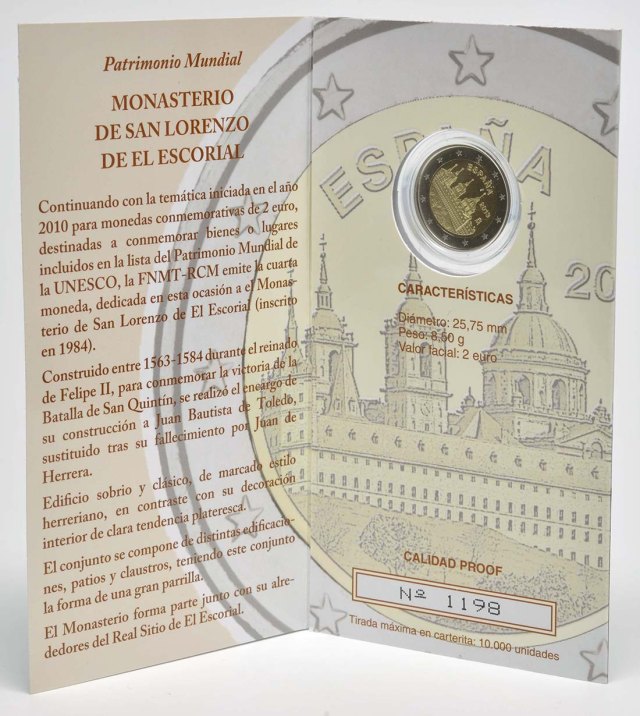
Series
UNESCO World Heritage Series
Mintages
Spanien
4,000,000Circulation: 3,929,200
Proof blister: 10,000
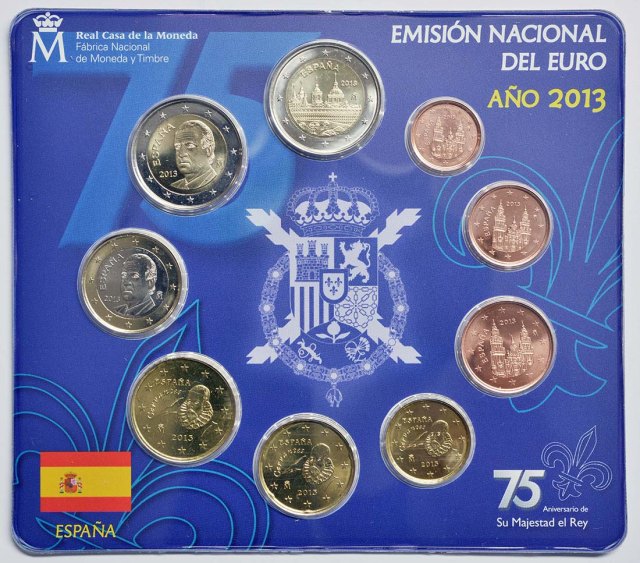
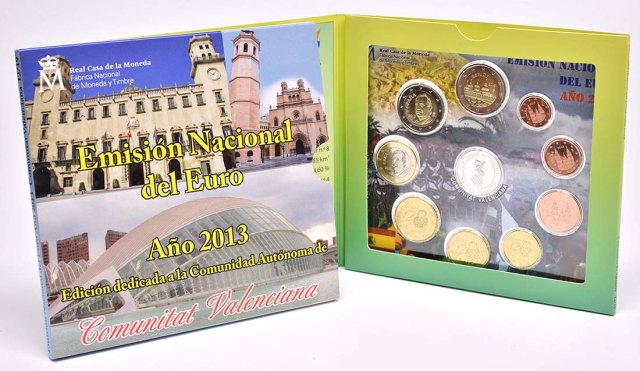
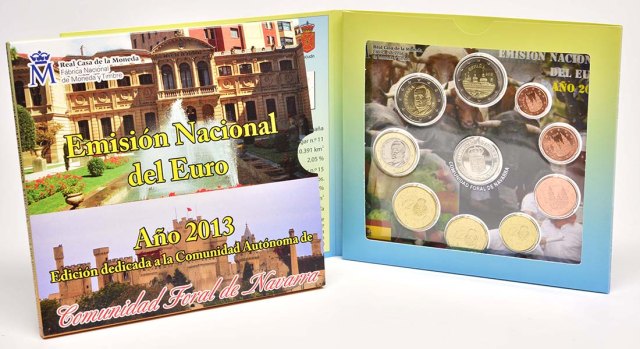
BU Mint Set: 11,500
BU Mint Set: 20,000
BU Mint Set: 20,000
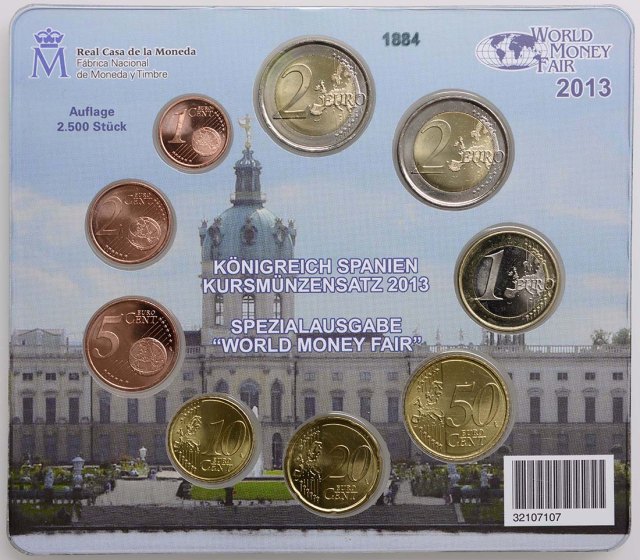
BU Mint Set: 2,500
BU Mint Set: 500
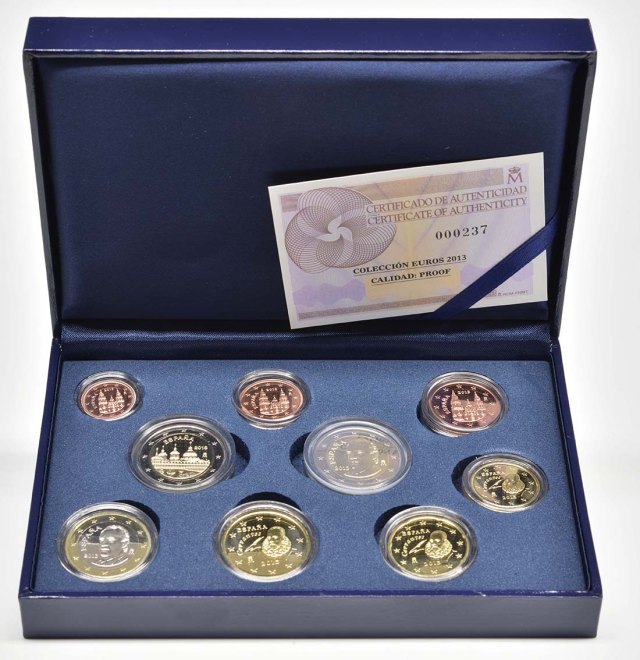
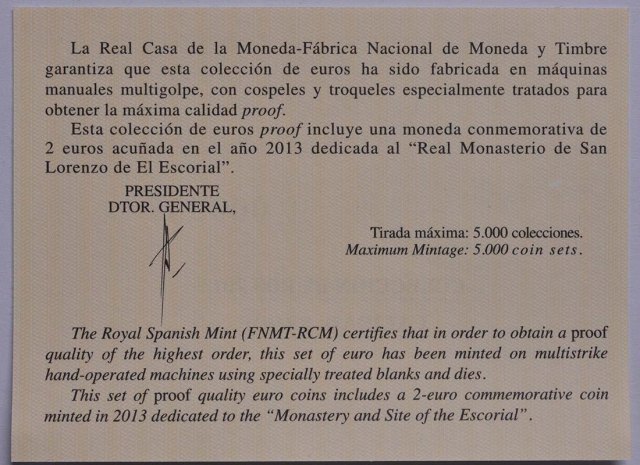
Coin set proof: 1,300
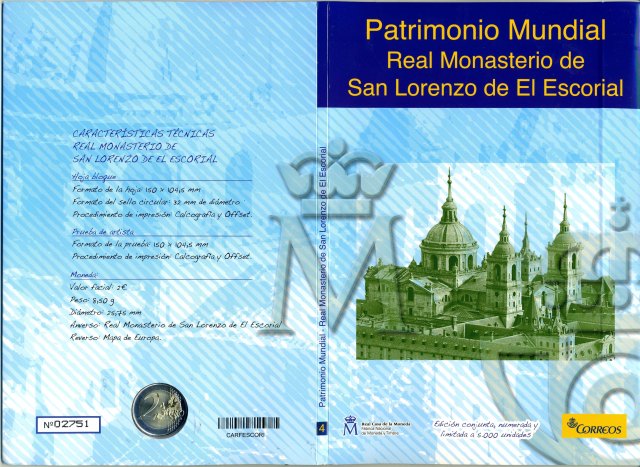
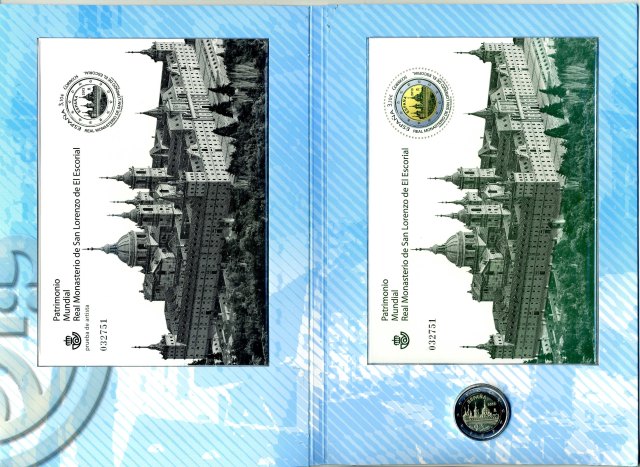
Numismatic cover: 5,000
Official issue prices
2013 · Proof blister: €23.00
2013 · BU Mint Set: 35,00
65,00
2013 · Coin set proof: €57.85
2013 · Numismatic cover: €17.36
Additional information
Spanien: WMF-Set 2013, 9 Münzen 5,88 €, mit 2CC, Aufl. 2.500 Ex., Preis 35,- €; BU-Set "75. Geburtstag Seiner Majestät des Königs Juan Carlos I", 9 Münzen 5,88 €, mit 2CC, Aufl. 25.000 Ex., KMS BU Regionenserie (Comunidad Foral de Navarra und Comunitat Valenciana) je 20.000 Ex., KMS BU "Tokio International Coin Convention", 500 Ex. , 9 Münzen, 5,88 €, 65,-; KMS PP mit ebenfalls 9 Münzen, 5,88 €;