
 Deutsch
 English
 Français
 Español
 Italiano
 Nederlands
 Português
 Slovenčina
 Hrvatski
 Slovenščina
 Lietuvių
 Eesti
Eesti Български
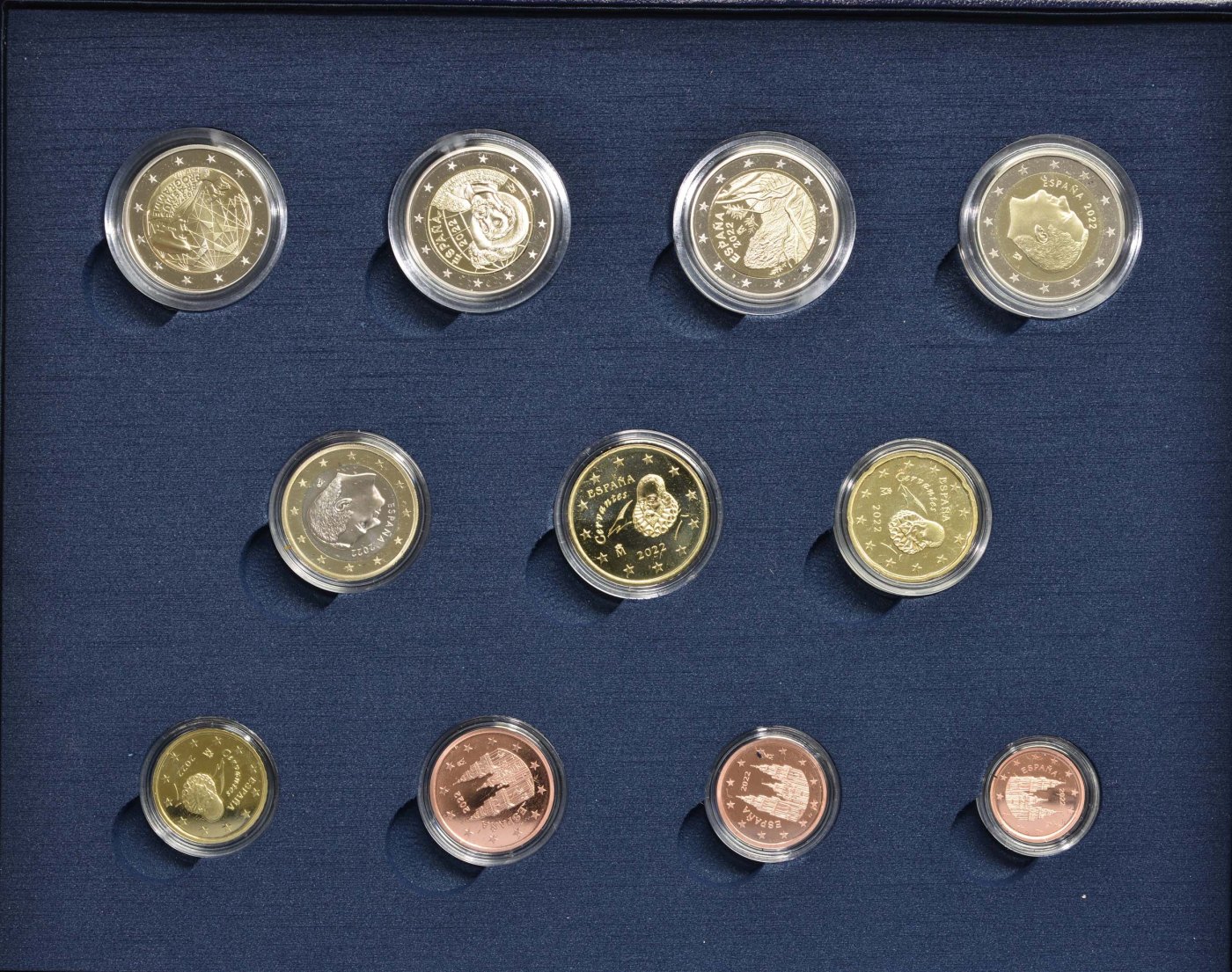
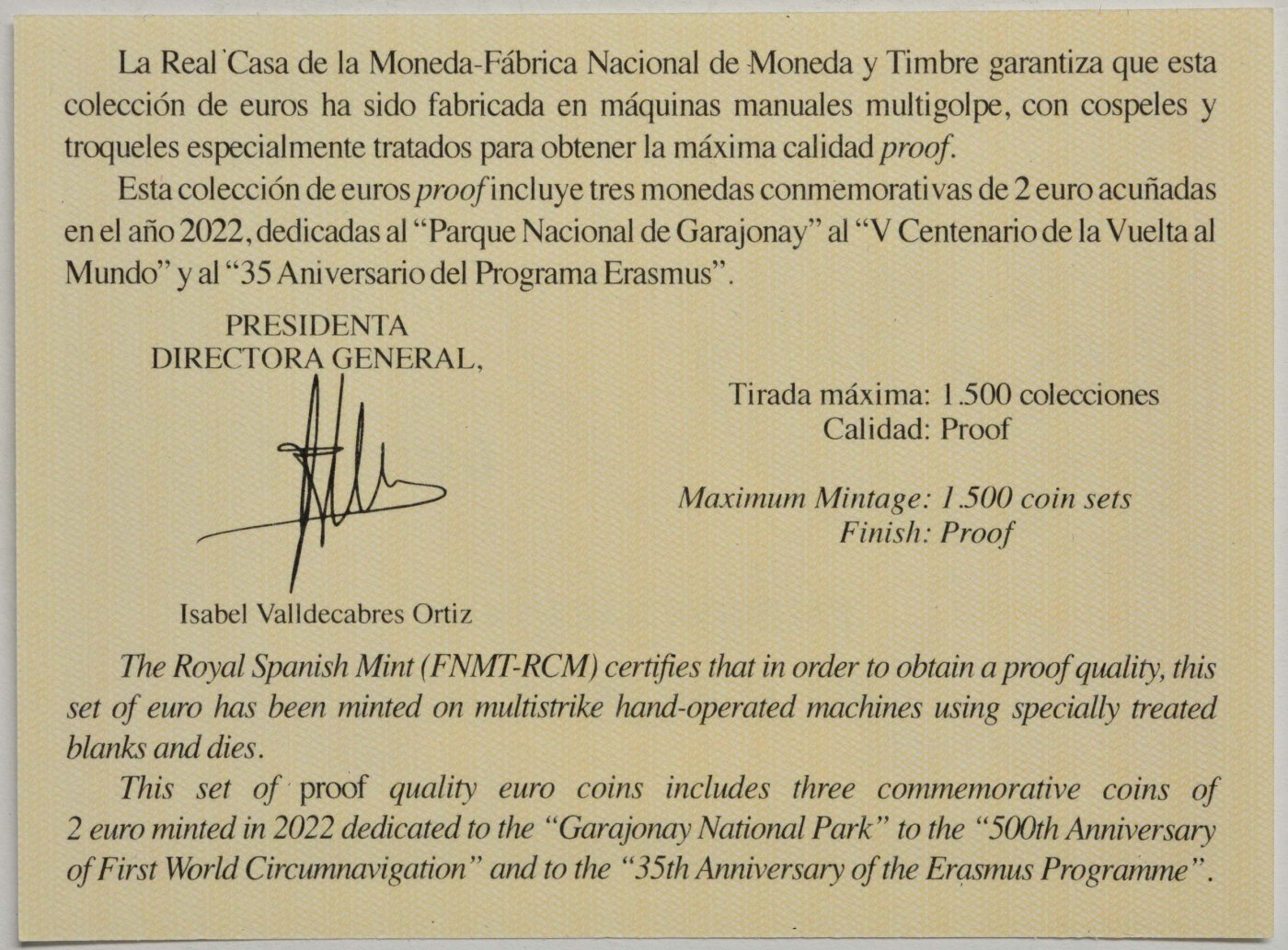
Coin set proof
Spain · 500th anniversary of the completion of the first circumnavigation of the world
Mintage information from source: max. 1.500
Issue occasion
The coin commemorates the 500th anniversary of the first circumnavigation of the world, which began in Seville in 1519 and was completed in 1522. The design features a portrait of Juan Sebastián Elcano in front of a globe, together with the inscriptions “JUAN SEBASTIÁN ELCANO” and “PRIMUS CIRCUMDEDISTI ME”. The years 1519 and 1522 are engraved on his shoulder.
The design
Background on the topic
The fleet consisted of five ships. It crossed the Atlantic, passed through the Strait of Magellan (Magellanstraße), later named after Magellan, at the southern tip of America, and reached the Pacific. The voyage was marked by shortages of food, diseases, mutinies and the loss of ships. Magellan himself did not reach Europe again: he was killed in 1521 during an armed conflict on the Philippine island of Mactan. Numerous other participants also died or left the expedition.
Juan Sebastián Elcano was a Basque navigator from Getaria. After Magellan’s death and several changes in leadership, he assumed command of the “Victoria”, the only ship to complete the entire route. From the Moluccas, Elcano sailed the ship westward across the Indian Ocean and around the Cape of Good Hope (Kap der Guten Hoffnung). Only 18 men from the original crew returned to Spain aboard the “Victoria”. This provided the first practical proof that an expedition could completely circumnavigate the Earth by sea.
Emperor Karl V granted Elcano a coat of arms featuring a globe and the Latin motto “Primus circumdedisti me”, meaning: “You were the first to circumnavigate me.” The wording refers to the Earth itself. The fact that Spain commemorated the anniversary on a circulating coin can be explained by Spain’s financing of the voyage, its point of departure in Andalusia and Elcano’s role in its completion. At the same time, the occasion recalls the early global interconnection of sea routes, trade and European claims to power.
Interesting Facts
This coin set contains all eight circulating coins from 1 cent to 2 euros, the 2-euro commemorative coin “500th anniversary of the end of the first circumnavigation of the world” (CC434), the 2-euro commemorative coin “Garajonay National Park” (CC435) and the 2-euro commemorative coin “35 years of the Erasmus Programme” (CC463), face value: €9.88.