
 Deutsch
 English
 Français
 Español
 Italiano
 Nederlands
 Português
 Slovenčina
 Hrvatski
 Slovenščina
 Lietuvių
 Eesti
Eesti Български


CC 182 2014
2 euro coin
coloured Proof
2 Euro Proof
France · World AIDS Day 2014
Mintage10,000
Issue price€20.00
Issue date24 Nov 2014
Packagingin case
Edge lettering2 ★ ★ × 6, alternating upright/inverted
Market price€159.00
Issue occasion
The coin commemorates the fight against AIDS on the occasion of World AIDS Day (Welt-Aids-Tag). The design shows three red ribbons, the symbol of solidarity with people living with AIDS: one is depicted in the classic orientation, while two others are upside down and supplemented with the letter “V” for the hoped-for victory over the disease. The date of World AIDS Day, “1er décembre”, is inscribed along the upper edge.
The design
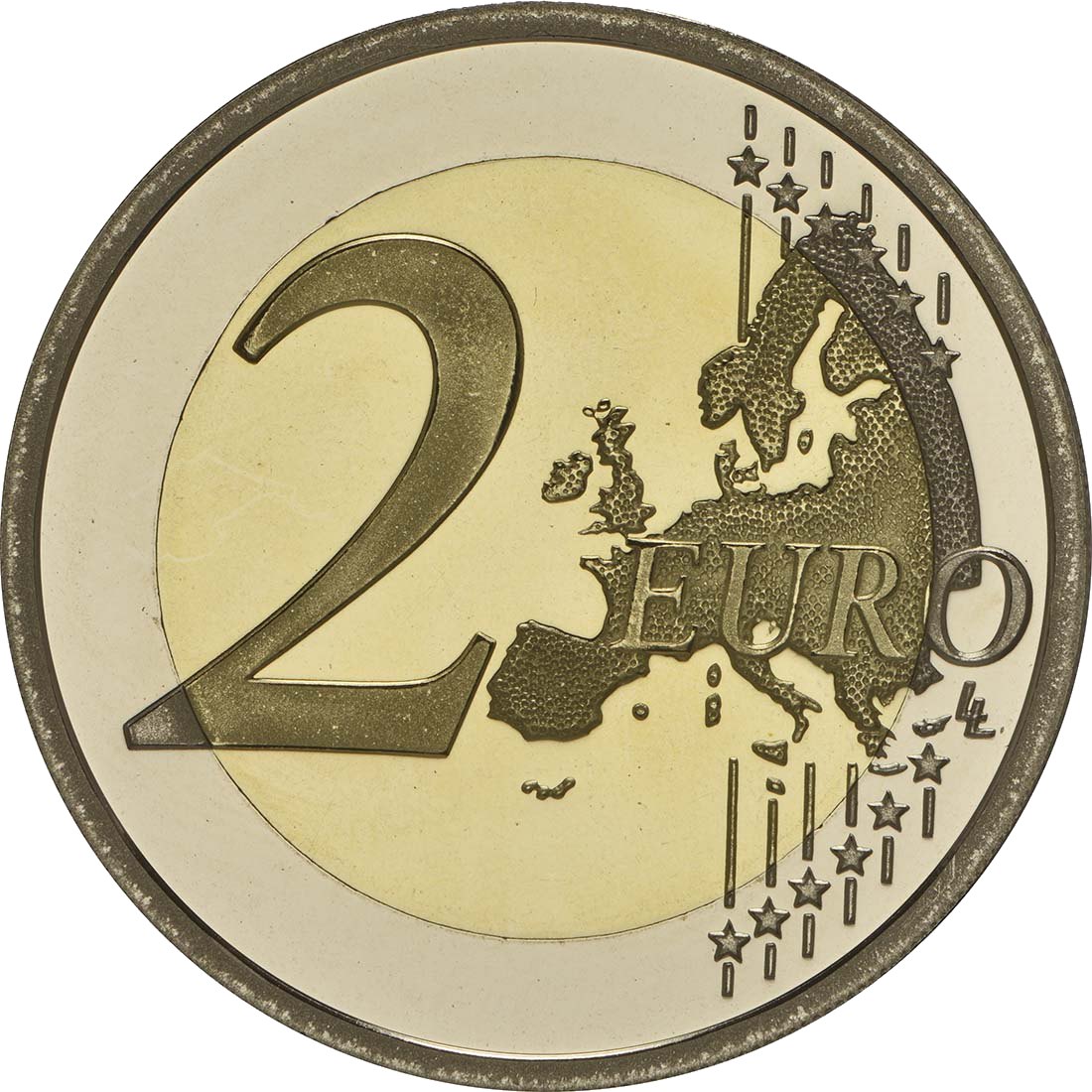
The national side of the coin shows the Red Ribbon, known as a symbol of the fight against AIDS. The Red Ribbon in the form of an inverted letter “V” was created by the artist group Visual Aids Artists Caucus and the American painter Frank Moore. It is intended to be worn over the heart and symbolises solidarity with all people with AIDS. On the day the disease is defeated, the ribbon is to be turned around so that the “V” for “victory” appears. The inner disc shows 3 ribbons. One of these ribbons is depicted in the classic orientation and is coloured red in the brilliant uncirculated and proof versions. The other two ribbons are depicted upside down and are complemented by two letters “V”, symbolising the long-awaited victory against the disease. The date of UNESCO’s World AIDS Day, “1 December”, forms the upper edge of the coin side. The twelve stars of the European flag are depicted on the outer ring of the coin.
Background on the topic
AIDS was recognized as a new disease in the early 1980s. It weakens the immune system and results from an untreated infection with the human immunodeficiency virus, HIV. HIV is transmitted primarily through unprotected sexual contact, shared injection equipment, contaminated blood products, and from mother to child. Everyday social contact, by contrast, poses no risk of transmission. A lack of knowledge about this led early on to fear, exclusion, and discrimination, particularly against gay men and drug users.
France played a role in researching the pathogen. In 1983, a team at the Paris Institut Pasteur led by Françoise Barré-Sinoussi and Luc Montagnier isolated a virus that was later designated HIV. Barré-Sinoussi and Montagnier jointly received half of the Nobel Prize in Physiology or Medicine for this in 2008. Since the mid-1990s, combinations of antiretroviral drugs have been able to effectively suppress the replication of the virus. They often prevent the onset of AIDS and also reduce the risk of transmission. At the time the coin was issued, however, there was neither a generally available cure nor a vaccine; access to treatment was also unevenly distributed worldwide.
World AIDS Day was first observed in 1988 on the initiative of the World Health Organization. It was the first international health day of its kind. Since 1996, the global campaign has been coordinated by the Joint United Nations Programme on HIV/AIDS, UNAIDS. December 1 serves to raise awareness of prevention and treatment, commemorate those who have died, and combat the social stigmatization of people living with HIV.
The Red Ribbon originated in 1991 in connection with the New York artists’ initiative Visual AIDS. The symbol was deliberately designed to be simple and could be reused without attribution or commercial rights. As a result, it quickly spread internationally. The French issue of 2014 thus adopted a globally understood symbol and used a circulation coin to make the subject visible beyond medical circles and organized commemorative events.
France played a role in researching the pathogen. In 1983, a team at the Paris Institut Pasteur led by Françoise Barré-Sinoussi and Luc Montagnier isolated a virus that was later designated HIV. Barré-Sinoussi and Montagnier jointly received half of the Nobel Prize in Physiology or Medicine for this in 2008. Since the mid-1990s, combinations of antiretroviral drugs have been able to effectively suppress the replication of the virus. They often prevent the onset of AIDS and also reduce the risk of transmission. At the time the coin was issued, however, there was neither a generally available cure nor a vaccine; access to treatment was also unevenly distributed worldwide.
World AIDS Day was first observed in 1988 on the initiative of the World Health Organization. It was the first international health day of its kind. Since 1996, the global campaign has been coordinated by the Joint United Nations Programme on HIV/AIDS, UNAIDS. December 1 serves to raise awareness of prevention and treatment, commemorate those who have died, and combat the social stigmatization of people living with HIV.
The Red Ribbon originated in 1991 in connection with the New York artists’ initiative Visual AIDS. The symbol was deliberately designed to be simple and could be reused without attribution or commercial rights. As a result, it quickly spread internationally. The French issue of 2014 thus adopted a globally understood symbol and used a circulation coin to make the subject visible beyond medical circles and organized commemorative events.
eBay price analysis
For this issue, there is a price history based on actual eBay sales – with median, range and number of sales
View price analysis