
 Deutsch
 English
 Français
 Español
 Italiano
 Nederlands
 Português
 Slovenčina
 Hrvatski
 Slovenščina
 Lietuvių
 Eesti
Eesti Български


CC 505 2023
Coincard
BU
Coincard
Croatia · The introduction of the euro as Croatia's official currency on 01.01.2023
Mintage195,000
Issue price€10.00
Issue date15 Sept 2023
PackagingCoincard
Edge letteringO LIJEPA O DRAGA O SLATKA SLOBODO
Market price€10.00
Issue occasion
The commemorative coin honours the introduction of the euro as Croatia’s official currency on 1 January 2023. The inscriptions “HRVATSKA”, “2023” and “ČLANICA EUROPODRUČJA” visually form a stylised euro sign. The Croatian chequerboard pattern, as part of the coat of arms, is also depicted in the centre.
The design
The coin design features the name of the issuing state “HRVATSKA” (Croatia) and the year of issue “2023” horizontally, as well as the inscription “ČLANICA EUROPODRUČJA” (member of the euro area) in a semicircle along the inner ring of the coin. Together, these inscriptions visually form a stylised euro sign (“€” ). The other central motif on the coin is the checkerboard pattern, a readily recognisable symbol of Croatia and part of the Croatian coat of arms.
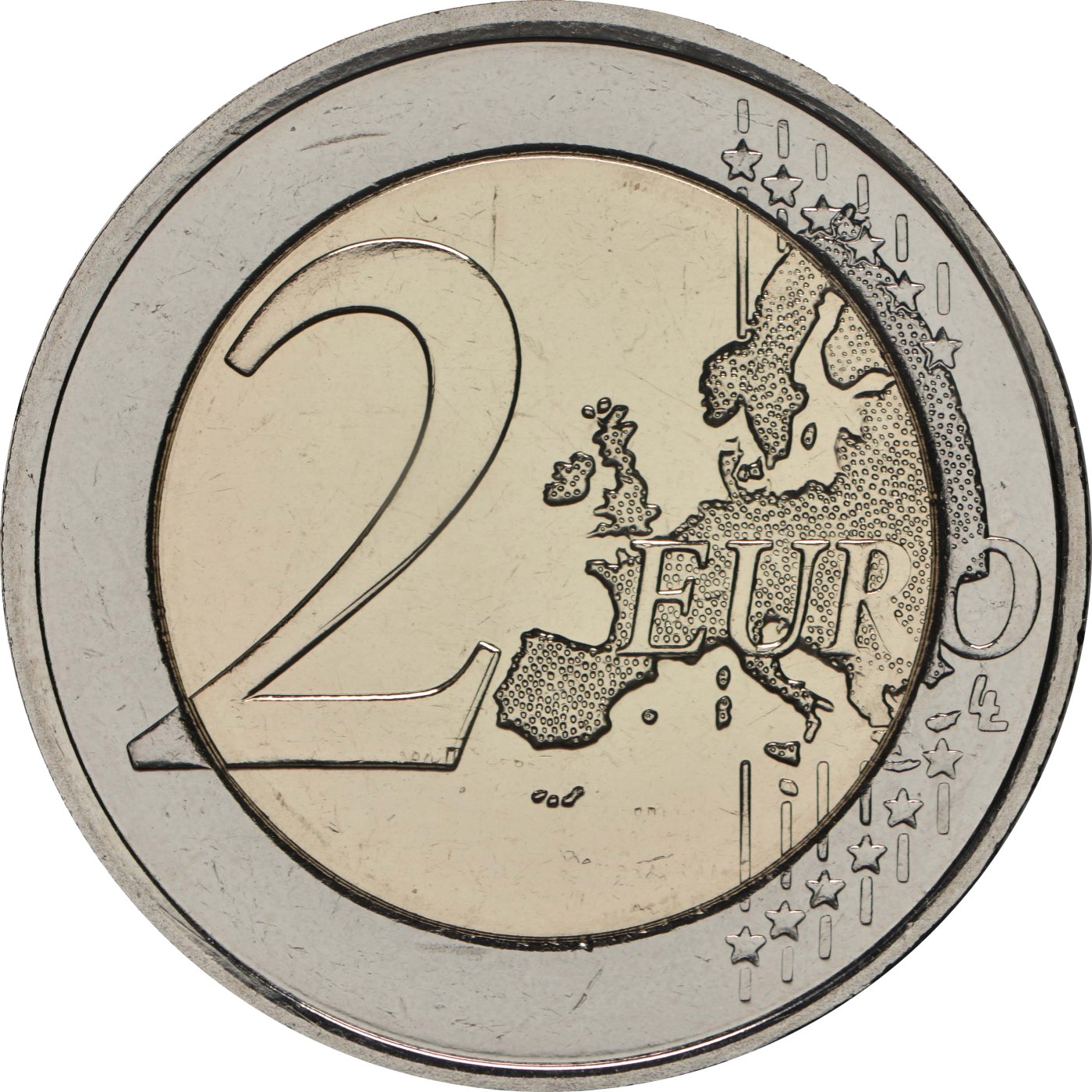
The twelve stars of the European flag are depicted on the outer ring of the coin.
The twelve stars of the European flag are depicted on the outer ring of the coin.
Background on the topic
Croatia joined the European Union in 2013. This was also generally associated with the obligation to introduce the euro once the conditions laid down for this purpose had been fulfilled. Unlike states with a contractually agreed opt-out, Croatia had no permanent right to retain its national currency.
An important intermediate step was joining Exchange Rate Mechanism II in 2020. Under this procedure, the Croatian kuna had to prove sufficiently stable against the euro. In addition, the so-called convergence criteria were examined. They concern, among other things, price stability, public finances, long-term interest rates and the compatibility of national legislation with the rules of the European Economic and Monetary Union. Following a positive assessment, the competent EU institutions decided in 2022 to admit Croatia to the euro area. The conversion rate was irrevocably fixed at 7.53450 kuna per euro.
The kuna had been Croatia’s currency since 1994. It had replaced the Croatian dinar, which had been introduced as a transitional currency during the state’s secession from Yugoslavia. The changeover to the euro thus brought to an end a phase of independent Croatian monetary policy lasting nearly three decades. Croatia became the twentieth member of the euro area.
Economically, the country had already been closely linked to the euro. Some savings and loans were held in euros or pegged to it. Tourism, foreign trade and financial relations were also strongly oriented towards other EU and euro-area countries. With accession, exchange-rate costs vis-à-vis these states were eliminated; at the same time, responsibility for monetary policy passed to the Eurosystem, in which the Croatian central bank has participated ever since.
The issue of a commemorative coin was a natural choice because the changeover of the currency represented a clearly datable step in European integration. At the same time, it was the first Croatian 2-euro commemorative coin. The design therefore combines membership of the common currency area with an immediately recognisable symbol of state identity.
An important intermediate step was joining Exchange Rate Mechanism II in 2020. Under this procedure, the Croatian kuna had to prove sufficiently stable against the euro. In addition, the so-called convergence criteria were examined. They concern, among other things, price stability, public finances, long-term interest rates and the compatibility of national legislation with the rules of the European Economic and Monetary Union. Following a positive assessment, the competent EU institutions decided in 2022 to admit Croatia to the euro area. The conversion rate was irrevocably fixed at 7.53450 kuna per euro.
The kuna had been Croatia’s currency since 1994. It had replaced the Croatian dinar, which had been introduced as a transitional currency during the state’s secession from Yugoslavia. The changeover to the euro thus brought to an end a phase of independent Croatian monetary policy lasting nearly three decades. Croatia became the twentieth member of the euro area.
Economically, the country had already been closely linked to the euro. Some savings and loans were held in euros or pegged to it. Tourism, foreign trade and financial relations were also strongly oriented towards other EU and euro-area countries. With accession, exchange-rate costs vis-à-vis these states were eliminated; at the same time, responsibility for monetary policy passed to the Eurosystem, in which the Croatian central bank has participated ever since.
The issue of a commemorative coin was a natural choice because the changeover of the currency represented a clearly datable step in European integration. At the same time, it was the first Croatian 2-euro commemorative coin. The design therefore combines membership of the common currency area with an immediately recognisable symbol of state identity.