
 Deutsch
 English
 Français
 Español
 Italiano
 Nederlands
 Português
 Slovenčina
 Hrvatski
 Slovenščina
 Lietuvių
 Eesti
Eesti Български
Reverse
Obverse

Latvia · 100 years of the Bank of Latvia
Issue date12 Apr 2022
Total mintage415,000
EU maximum415,000
Editions3
Edge letteringDIEVS ★ SVĒTĪ ★ LATVIJU
Inscription2022 / LATVIJA
DesignerReinis Pētersons
mintUAB Lietuvos monetų kalykla, Vilnius (Lithuania)
Issue occasion
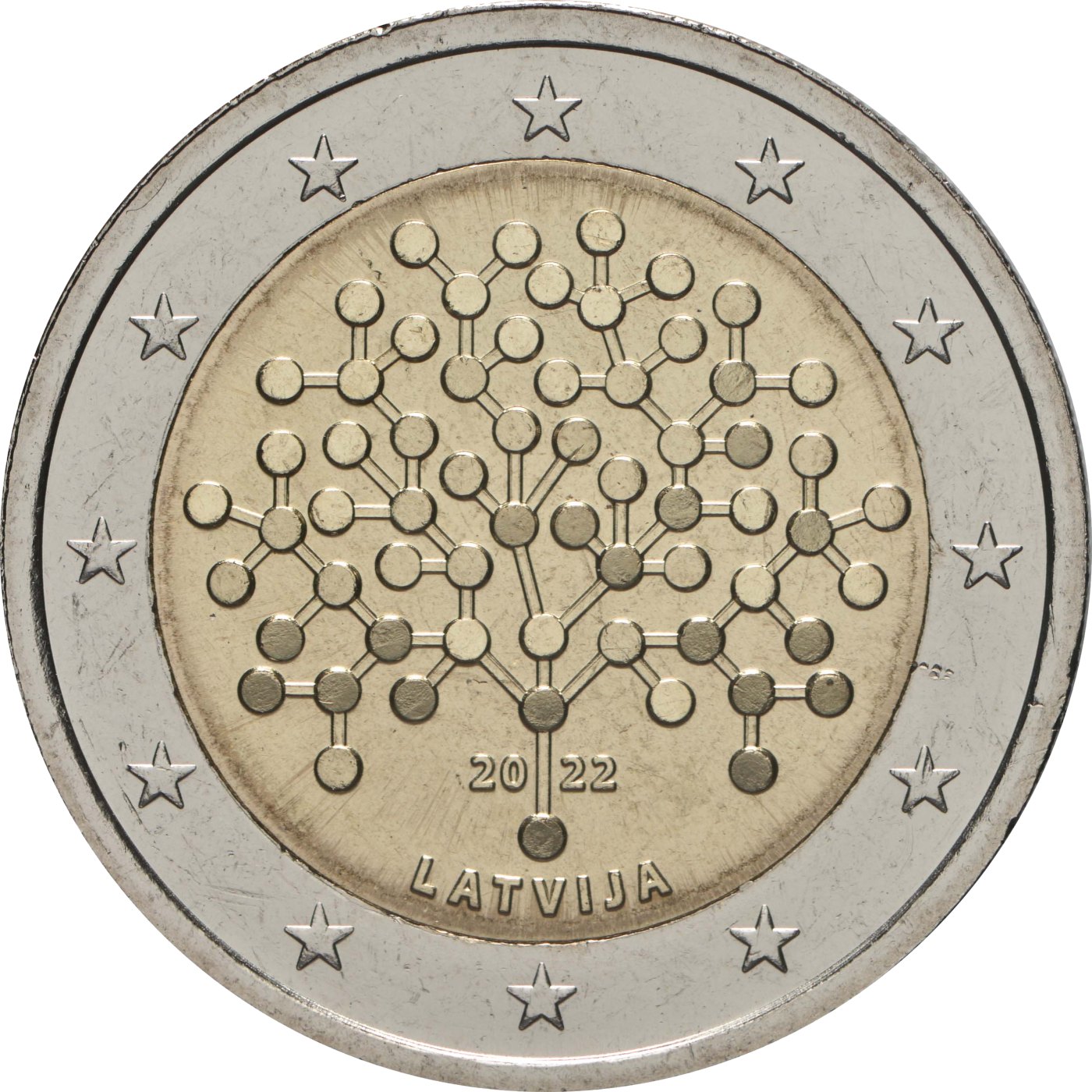
The coin commemorates the centenary of Latvia’s central bank “Latvijas Banka” and focuses on financial literacy. The design features a tree as a symbol of the importance of acquiring and continually developing financial skills throughout one’s life. Beneath the tree are the year “2022” and the inscription “LATVIJA”.
The design
Financial literacy describes the important ability to master and effectively use various financial skills, including managing, budgeting and investing one’s own finances. Financial literacy is the foundation of our relationship with money and must be developed throughout our lives. The coin design shows a tree as a symbol of the importance of financial literacy and acquiring it. The year of issue “2022” is shown below the tree, and the issuing country “LATVIJA” below the year. The twelve stars of the European flag are depicted on the outer ring of the coin.
Background on the topic
Latvijas Banka was established during the early phase of the Republic of Latvia, founded in 1918. After the First World War and the Latvian War of Independence, the new state had to build its own administrative, financial and monetary structures. The central bank was established by a government decision in 1922 and began its activities in the same year. At the same time, Latvia introduced the lats as its national currency. The bank was granted the right to issue banknotes and took on further responsibilities in payment and credit operations.
With the Soviet occupation of Latvia in 1940, Latvijas Banka lost its independence. It was dissolved and incorporated into the Soviet banking system. During the following decades, Latvia had neither an independent central bank nor its own currency. In the course of the restoration of state independence, Latvijas Banka was legally re-established in 1990. After a transitional period, Latvia reintroduced the lats in 1993.
Since Latvia’s accession to the European Union in 2004, the central bank also prepared for subsequent participation in the monetary union. On 1 January 2014, the euro replaced the lats. Since then, Latvijas Banka has been part of the Eurosystem and, together with the European Central Bank and the central banks of the other euro-area countries, participates in the common monetary policy. Its other areas of activity include the supply of cash, payment transactions, economic analysis and the management of foreign exchange reserves.
Linking the anniversary with financial literacy focuses not only on the history of the institution but also on everyday dealings with money. Knowledge of income, expenditure, saving, credit, risks and investment influences private decisions and can help protect against over-indebtedness or unsuitable financial products. The subject thus also refers to a public educational responsibility of modern central banks. Instead of a portrait or a historic bank building, a contemporary theme was therefore chosen, highlighting the role of financial knowledge in an increasingly digital and diverse financial world.
With the Soviet occupation of Latvia in 1940, Latvijas Banka lost its independence. It was dissolved and incorporated into the Soviet banking system. During the following decades, Latvia had neither an independent central bank nor its own currency. In the course of the restoration of state independence, Latvijas Banka was legally re-established in 1990. After a transitional period, Latvia reintroduced the lats in 1993.
Since Latvia’s accession to the European Union in 2004, the central bank also prepared for subsequent participation in the monetary union. On 1 January 2014, the euro replaced the lats. Since then, Latvijas Banka has been part of the Eurosystem and, together with the European Central Bank and the central banks of the other euro-area countries, participates in the common monetary policy. Its other areas of activity include the supply of cash, payment transactions, economic analysis and the management of foreign exchange reserves.
Linking the anniversary with financial literacy focuses not only on the history of the institution but also on everyday dealings with money. Knowledge of income, expenditure, saving, credit, risks and investment influences private decisions and can help protect against over-indebtedness or unsuitable financial products. The subject thus also refers to a public educational responsibility of modern central banks. Instead of a portrait or a historic bank building, a contemporary theme was therefore chosen, highlighting the role of financial knowledge in an increasingly digital and diverse financial world.
eBay price analysis
For this issue, there is a price history based on actual eBay sales – with median, range and number of sales
View price analysis2 Euro BU – Single page
- Mintage
- 400,000
- Market price
- €4.50
- Edge lettering
- DIEVS ★ SVĒTĪ ★ LATVIJU
Mintage by issue type
BU
400,000
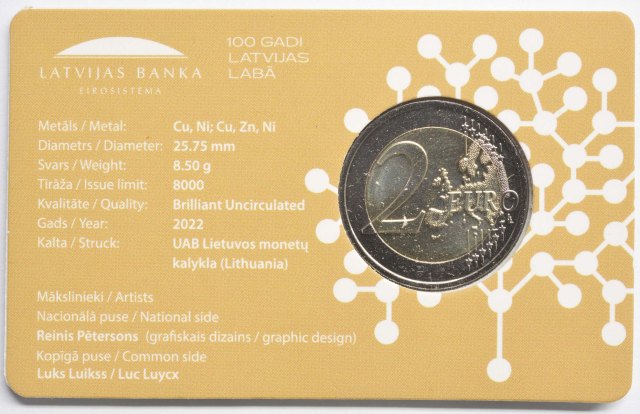
Coincard
8,000
Coin set
7,000
More editions
2


Official issue prices
2022 · Coincard: €8.80
2022 · BU Mint Set: €25.00