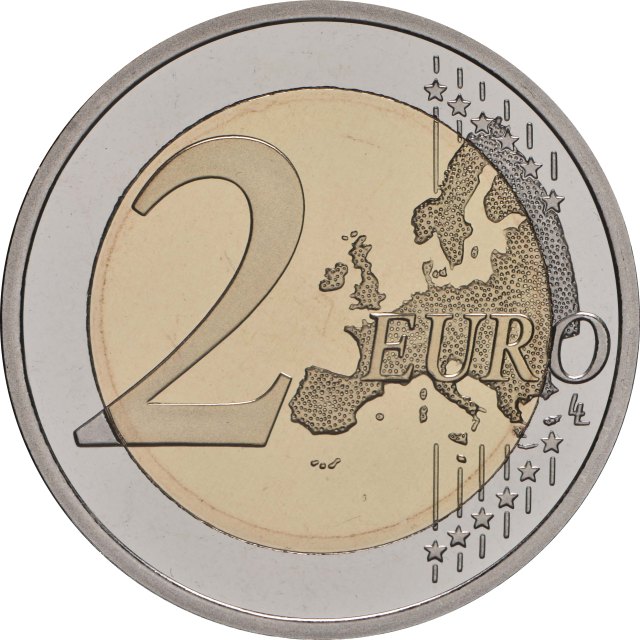
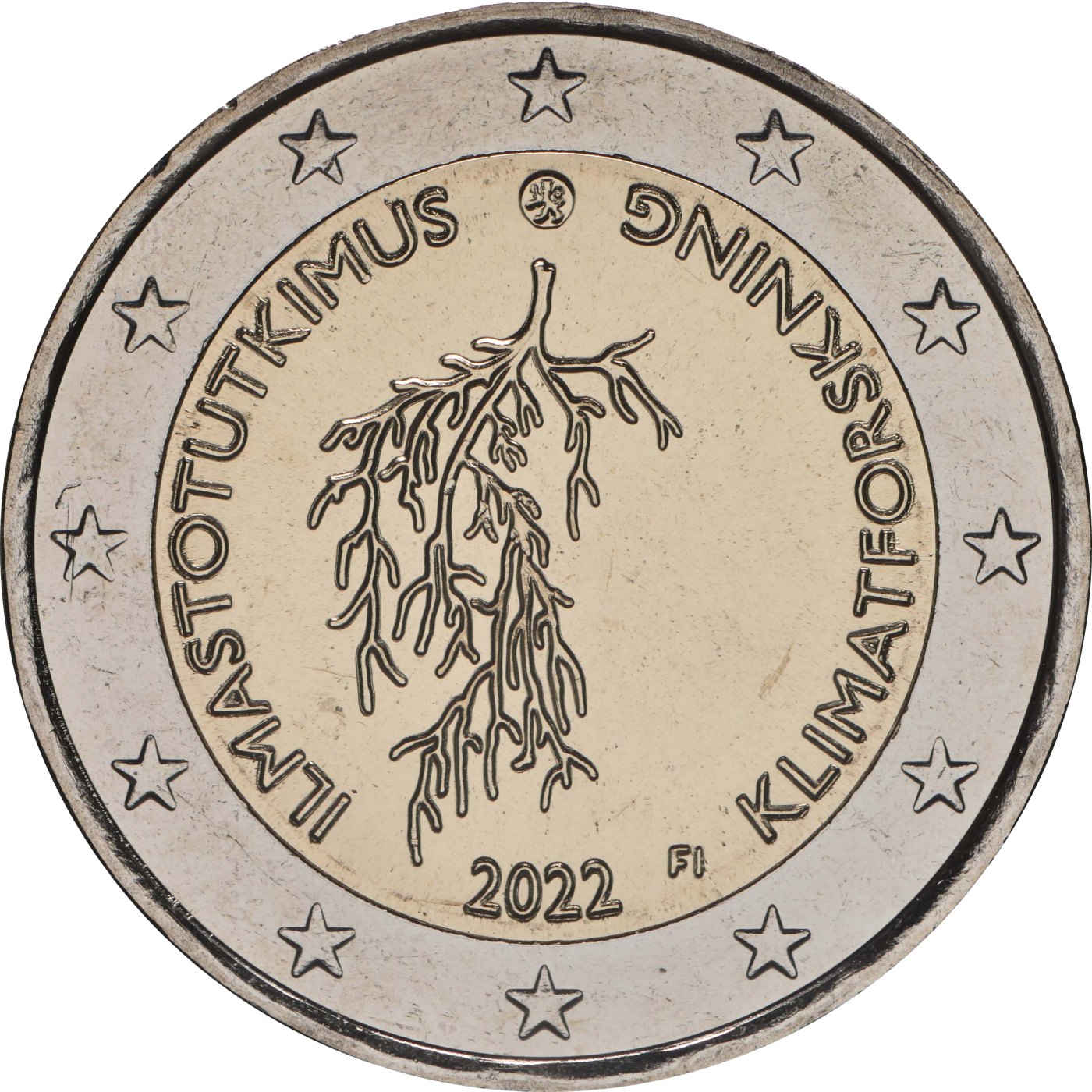
The commemorative coin is dedicated to climate research in Finland. The design shows a stylised beard lichen with its root-like structure, flanked by the inscription “KLIMAFORSCHUNG” in Finnish and Swedish. Below are the year and the country code “2022 FI”.
Background on the topic
Finland’s northern location makes the country particularly sensitive to changes in the climate. At high latitudes, the average temperature is rising faster than the global average. This affects, among other things, snow cover, periods of frost, bodies of water, Baltic Sea ice, peatlands and forests. In Lapland, changes in Arctic habitats are also being studied. For Finland, such developments are also economically and socially relevant, for example for forestry, agriculture, energy supply and transport.
Finnish climate research is based on a long series of meteorological observations. Today, it combines ground-based measuring stations with satellite data, model calculations and studies of natural climate archives. The institutions involved include the Finnish Meteorological Institute (Finnisches Meteorologisches Institut), universities, the Finnish Environment Institute (Finnisches Umweltinstitut) and the Natural Resources Institute Finland (Naturressourceninstitut). Finnish research groups also investigate the interactions between the atmosphere, forests and peatlands. This concerns both the consequences of warming and the uptake and release of greenhouse gases.
Lichens are suitable as a symbol of environmental monitoring because they respond sensitively to changes in their living conditions. They are not individual plants, but communities consisting of a fungus and a photosynthetically active partner, usually an alga or a cyanobacterium. They obtain most of their water and nutrients from their surroundings. Some lichen species are therefore used as bioindicators, for example to investigate air quality. Their distribution can also be influenced by temperature, humidity, snow cover and the characteristics of their habitat.
The issue was apparently dedicated not to a single research event or anniversary, but to the field of research as a whole. In 2022, the subject was also connected with Finnish climate policy: the renewed Climate Act set the goal of achieving CO₂ neutrality by 2035. Scientific measurements and models provide a basis for setting emission targets, assessing the effects of climate change and reviewing policy measures.
 Deutsch
 English
 Français
 Español
 Italiano
 Nederlands
 Português
 Slovenčina
 Hrvatski
 Slovenščina
 Lietuvių
 Eesti
Eesti Български