
 Deutsch
 English
 Français
 Español
 Italiano
 Nederlands
 Português
 Slovenčina
 Hrvatski
 Slovenščina
 Lietuvių
 Eesti
Eesti Български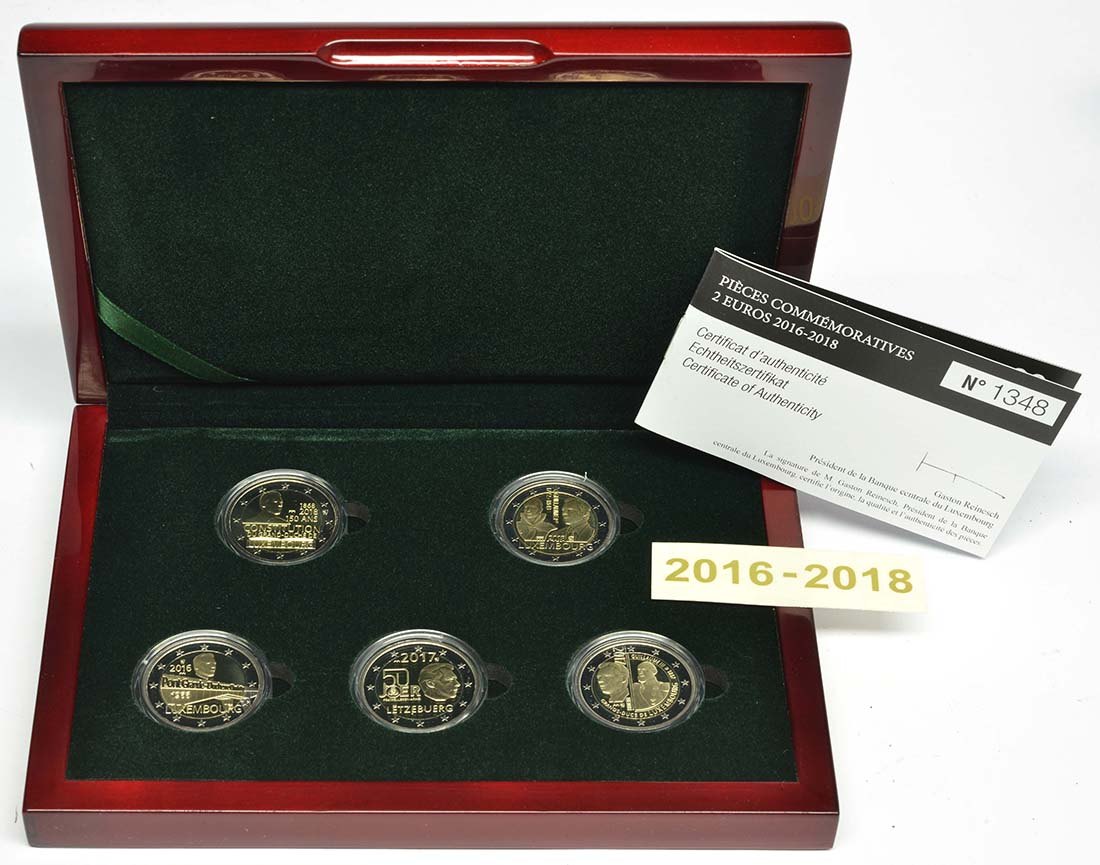
CC 322 2018
2 euro coin
Proof
2 Euro proof (5th proof set 2016 - 2018)
Luxembourg · 175th anniversary of the death of Grand Duke Guillaume I
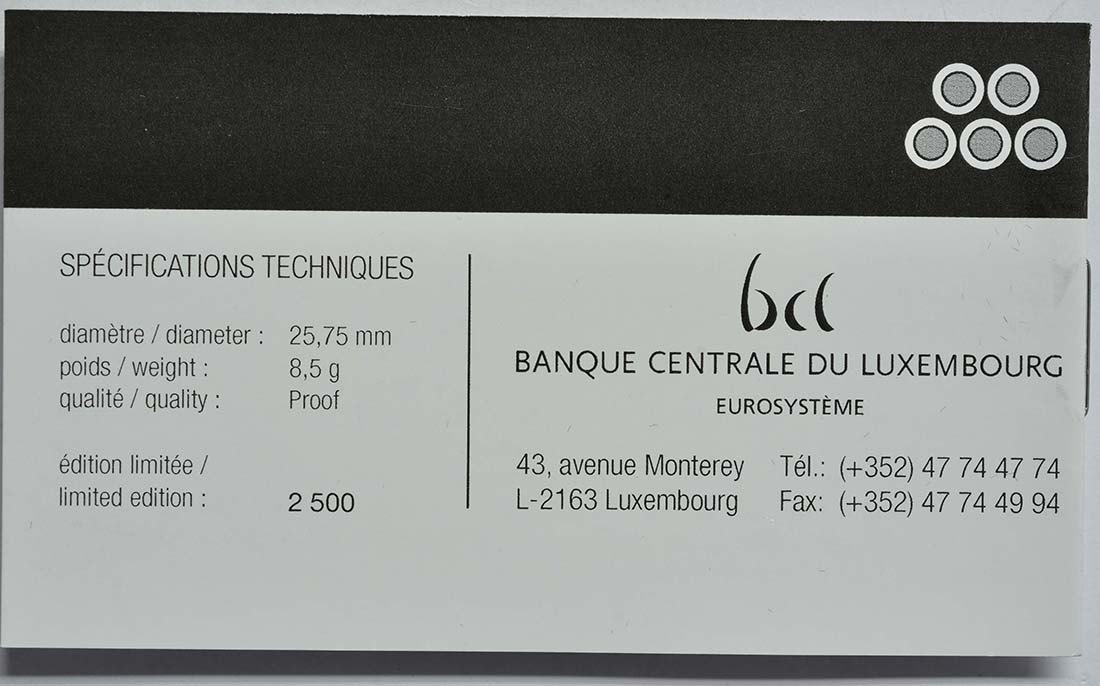
Mintage2,500
Issue date27 Aug 2018
Packaging5. Proof Set 2016 - 2018
Edge lettering2 ★ ★ × 6, alternating upright/inverted
Price of the set (5 coins)€690.00
Issue occasion
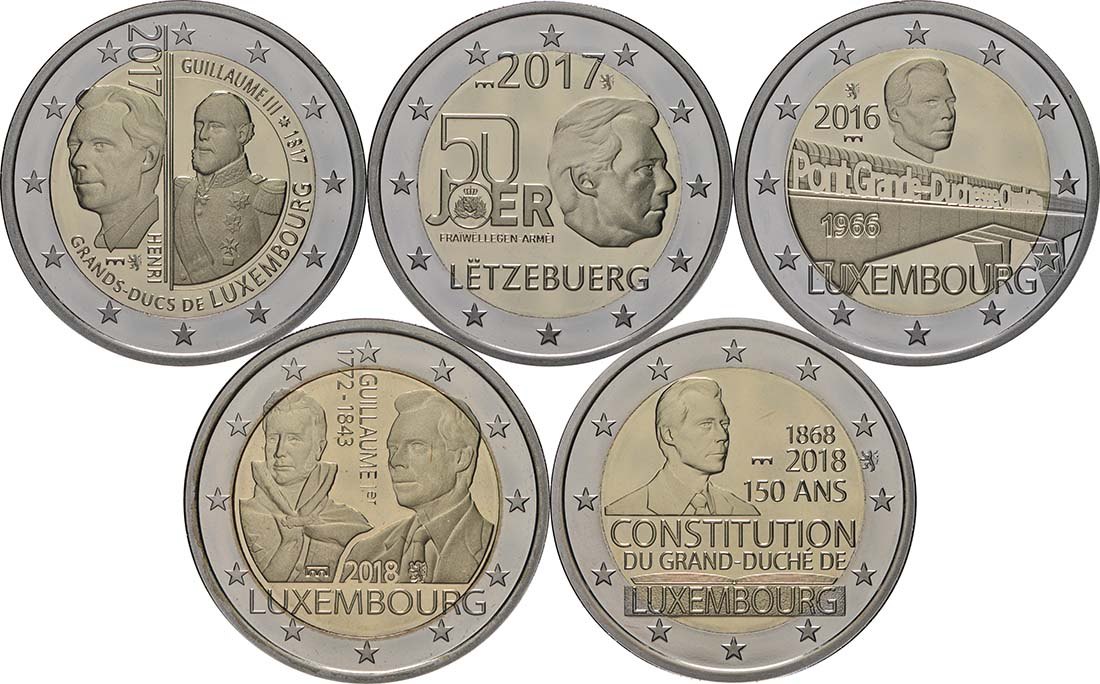
The commemorative coin marks the 175th anniversary of the death of Grand Duke Guillaume I. The design features the left-facing portraits of Grand Duke Henri and Grand Duke Guillaume I; between them, the dates of life “1772–1843” and the name “Guillaume I” are arranged vertically. Below them are “LUXEMBOURG” and the year “2018”.
The design
The coin’s design shows, on the right, the portrait of His Royal Highness Grand Duke Henri looking to the left and, on the left, the portrait of His Royal Highness Grand Duke Guillaume I. Between the two portraits, the dates of life “1772-1843” and the name “Guillaume I” are inserted vertically. Below them, the issuing country “LUXEMBOURG” and the year “2018” are depicted.
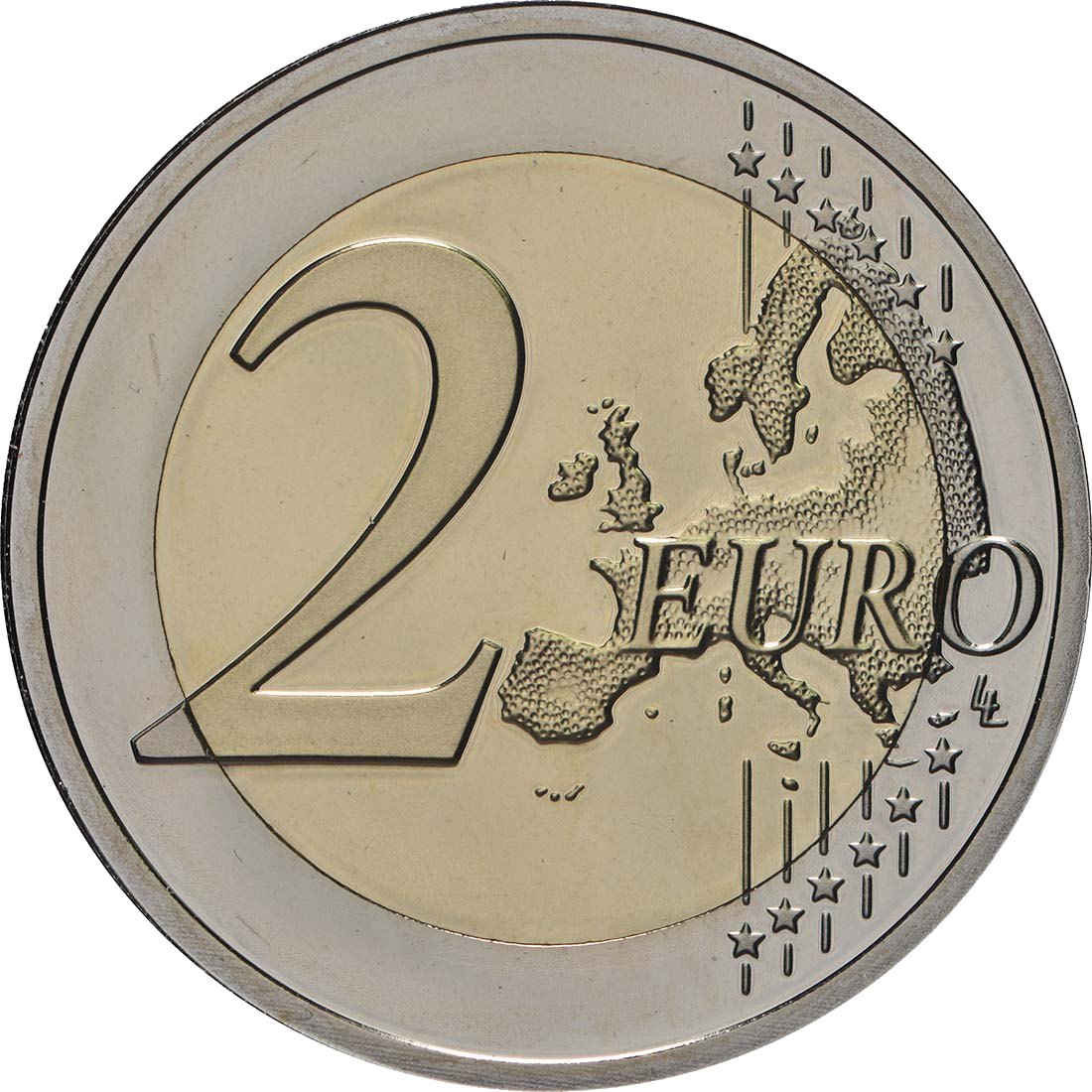
The twelve stars of the European flag are depicted on the coin’s outer ring.
The twelve stars of the European flag are depicted on the coin’s outer ring.
Background on the topic
Guillaume I., Willem I. in Dutch, descended from the House of Orange-Nassau. After the end of Napoleonic rule, he initially became sovereign prince of the Netherlands in 1813. The Congress of Vienna subsequently reorganised the region: in 1815, the United Kingdom of the Netherlands was established, encompassing approximately the present-day Netherlands, Belgium and Luxembourg. Guillaume became king of this state and, at the same time, the first sovereign Grand Duke of Luxembourg.
Luxembourg was not an ordinary part of the Dutch kingdom. It existed as a separate grand duchy in personal union with the Netherlands: both countries had the same ruler but remained legally separate from one another. Luxembourg was also a member of the German Confederation (Deutscher Bund). The Fortress of Luxembourg was secured as a federal fortress by a predominantly Prussian garrison. These multiple ties shaped the country’s political position in nineteenth-century Europe.
Guillaume’s reign was characterised by the attempt to integrate the northern and southern parts of his kingdom more closely. However, differences in religion, language, political representation and economic policy led to conflicts. In the Belgian Revolution of 1830, the southern provinces broke away from Dutch rule. The final settlement took place in 1839: the western, predominantly French-speaking part of Luxembourg became part of the newly established Belgium and today forms its province of Luxembourg. The remaining territory continued as a grand duchy under Guillaume. Luxembourg thus acquired essentially its present-day territorial shape.
In 1840, Guillaume abdicated in favour of his son Guillaume II. The personal union with the Netherlands continued until 1890; thereafter, the two monarchies went their separate ways because of different succession laws.
The choice of commemorative occasion thus refers to the formative period of the modern grand duchy. Guillaume I. represents Luxembourg’s elevation to a grand duchy, its international integration following the Congress of Vienna, and the territorial reorganisation of 1839. The juxtaposition with the present head of state places this early period within Luxembourg’s enduring monarchical institution.
Luxembourg was not an ordinary part of the Dutch kingdom. It existed as a separate grand duchy in personal union with the Netherlands: both countries had the same ruler but remained legally separate from one another. Luxembourg was also a member of the German Confederation (Deutscher Bund). The Fortress of Luxembourg was secured as a federal fortress by a predominantly Prussian garrison. These multiple ties shaped the country’s political position in nineteenth-century Europe.
Guillaume’s reign was characterised by the attempt to integrate the northern and southern parts of his kingdom more closely. However, differences in religion, language, political representation and economic policy led to conflicts. In the Belgian Revolution of 1830, the southern provinces broke away from Dutch rule. The final settlement took place in 1839: the western, predominantly French-speaking part of Luxembourg became part of the newly established Belgium and today forms its province of Luxembourg. The remaining territory continued as a grand duchy under Guillaume. Luxembourg thus acquired essentially its present-day territorial shape.
In 1840, Guillaume abdicated in favour of his son Guillaume II. The personal union with the Netherlands continued until 1890; thereafter, the two monarchies went their separate ways because of different succession laws.
The choice of commemorative occasion thus refers to the formative period of the modern grand duchy. Guillaume I. represents Luxembourg’s elevation to a grand duchy, its international integration following the Congress of Vienna, and the territorial reorganisation of 1839. The juxtaposition with the present head of state places this early period within Luxembourg’s enduring monarchical institution.
eBay price analysis
For this issue, there is a price history based on actual eBay sales – with median, range and number of sales
View price analysis