
 Deutsch
 English
 Français
 Español
 Italiano
 Nederlands
 Português
 Slovenčina
 Hrvatski
 Slovenščina
 Lietuvių
 Eesti
Eesti Български
Reverse

Obverse
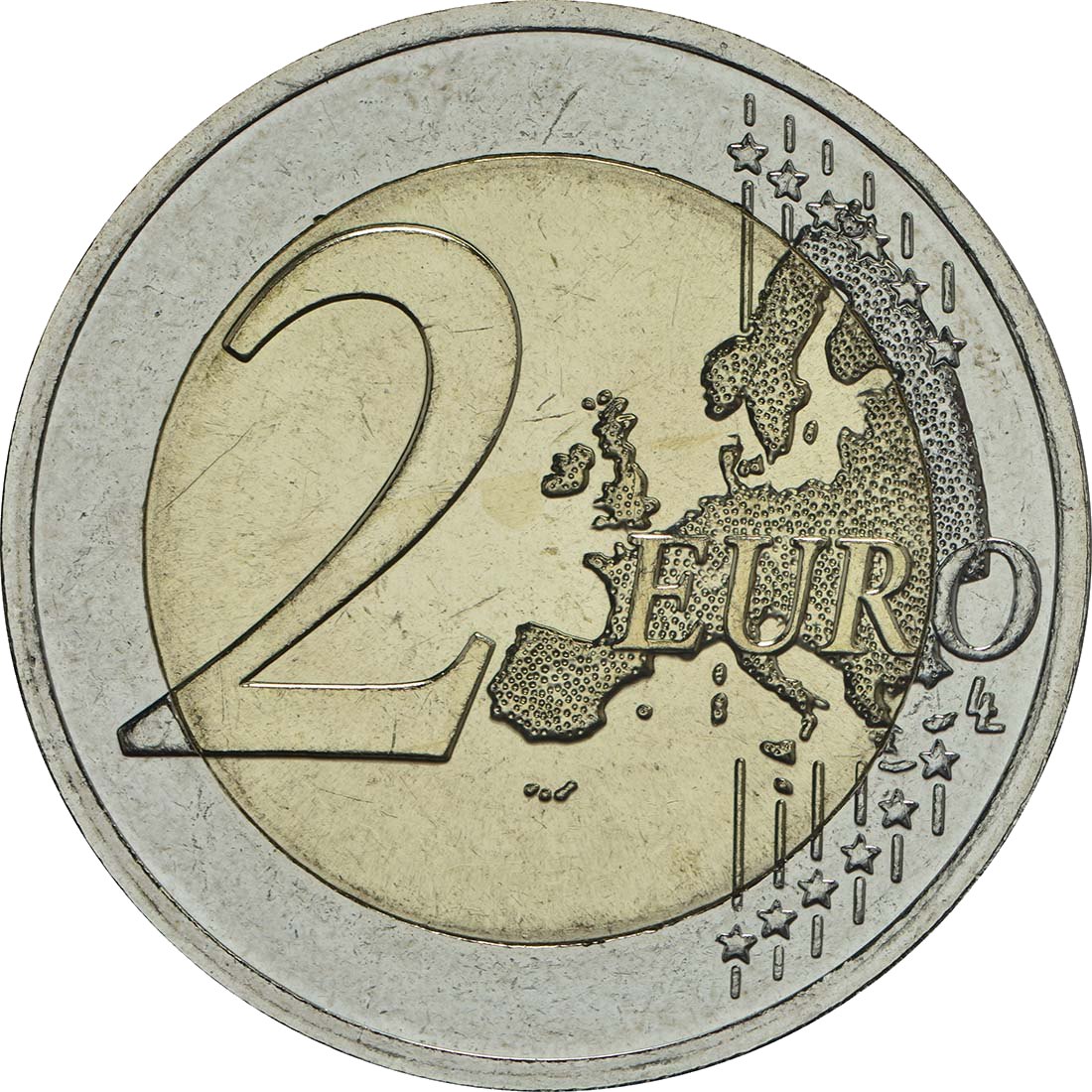
Estonia · Baltic States joint issue: 100 years of independence
Issue date31 Jan 2018
Total mintage500,000
EU maximum500,000
Editions3
Edge letteringEESTI × 2, alternating upright/inverted, separated by dots
InscriptionEESTI / 2018
DesignerJustas Petrulis
mintUAB Lietuvos monetų kalykla, Vilnius (Lithuania)
Issue occasion
The coin commemorates the 100th anniversary of the founding of Estonia and Latvia and the re-establishment of Lithuania. The shared design depicts the three Baltic states as an intertwined braid, thereby referring to their shared past, present and future. It is complemented by a stylised numeral for the 100th anniversary, the heraldic symbols of all three states, and the inscriptions “EESTI” and “2018”.
The design
The three Baltic Member States are symbolically depicted as a single braid. They are connected by their history: a shared past, present and future. A stylized numeral for the 100th anniversary and the heraldic symbols of all three Member States are also depicted. The name of the issuing country, “EESTI”, appears on the left, and the year of issue, “2018”, on the right. The coin design was selected following a public vote in all three Baltic countries.
The twelve stars of the European flag are depicted on the coin’s outer ring.
The twelve stars of the European flag are depicted on the coin’s outer ring.
Background on the topic
Until the First World War, Estonia and Latvia belonged to the Russian Empire. Most of the Lithuanian settlement area was also under Russian rule; Lithuania was able to build on an older state tradition of the Grand Duchy of Lithuania (Großfürstentum Litauen). The war, the German occupation of the Baltic states and the collapse of the Tsarist Empire opened up the possibility for the independence movements there to establish their own states.
On 16 February 1918, the Council of Lithuania (Litauischer Staatsrat) declared in Vilnius the restoration of an independent Lithuanian state with a democratic system. The term restoration refers to the fact that, even before the partitions of the Polish–Lithuanian Commonwealth at the end of the 18th century, Lithuania had possessed an independent state tradition. In Estonia, a Salvation Committee appointed by the Landtag proclaimed state independence on 24 February 1918. Latvia followed on 18 November 1918: after the end of the German occupation, the Latvian People's Council (Lettischer Volksrat) proclaimed the republic in Riga.
The declarations alone did not yet secure independence. In the following years, the three states had to assert themselves in military conflicts against Bolshevik troops and other armed forces. Peace treaties and international recognition subsequently consolidated their position. During the interwar period, they developed their own state institutions before being occupied and annexed by the Soviet Union in 1940. German occupation during the Second World War was followed by renewed Soviet rule.
The memory of 1918 therefore remained closely connected with the regaining of independence in 1990 and 1991. Estonia, Latvia and Lithuania did not regard their separation from the Soviet Union at that time as the founding of new states in legal terms, but as the restoration of the republics established or renewed in 1918. Common experiences under foreign rule and cooperation during the independence movements—visible, for example, in the human chain of the “Baltic Way” („Baltischer Weg“) in 1989—explain why the three anniversaries were commemorated jointly.
On 16 February 1918, the Council of Lithuania (Litauischer Staatsrat) declared in Vilnius the restoration of an independent Lithuanian state with a democratic system. The term restoration refers to the fact that, even before the partitions of the Polish–Lithuanian Commonwealth at the end of the 18th century, Lithuania had possessed an independent state tradition. In Estonia, a Salvation Committee appointed by the Landtag proclaimed state independence on 24 February 1918. Latvia followed on 18 November 1918: after the end of the German occupation, the Latvian People's Council (Lettischer Volksrat) proclaimed the republic in Riga.
The declarations alone did not yet secure independence. In the following years, the three states had to assert themselves in military conflicts against Bolshevik troops and other armed forces. Peace treaties and international recognition subsequently consolidated their position. During the interwar period, they developed their own state institutions before being occupied and annexed by the Soviet Union in 1940. German occupation during the Second World War was followed by renewed Soviet rule.
The memory of 1918 therefore remained closely connected with the regaining of independence in 1990 and 1991. Estonia, Latvia and Lithuania did not regard their separation from the Soviet Union at that time as the founding of new states in legal terms, but as the restoration of the republics established or renewed in 1918. Common experiences under foreign rule and cooperation during the independence movements—visible, for example, in the human chain of the “Baltic Way” („Baltischer Weg“) in 1989—explain why the three anniversaries were commemorated jointly.
eBay price analysis
For this issue, there is a price history based on actual eBay sales – with median, range and number of sales
View price analysis2 Euro BU – Single page
- Mintage
- 485,000
- Market price
- €7.50
- Edge lettering
- EESTI × 2, alternating upright/inverted, separated by dots
Mintage by issue type
BU
485,000
Coincard
10,000
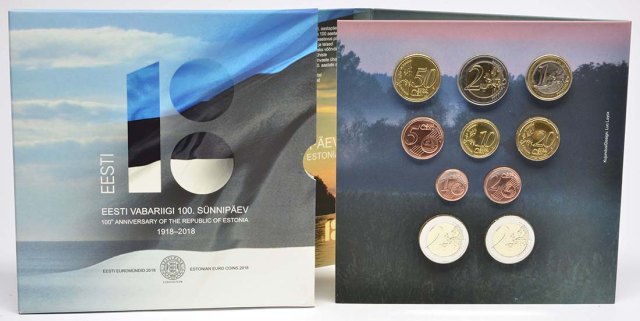
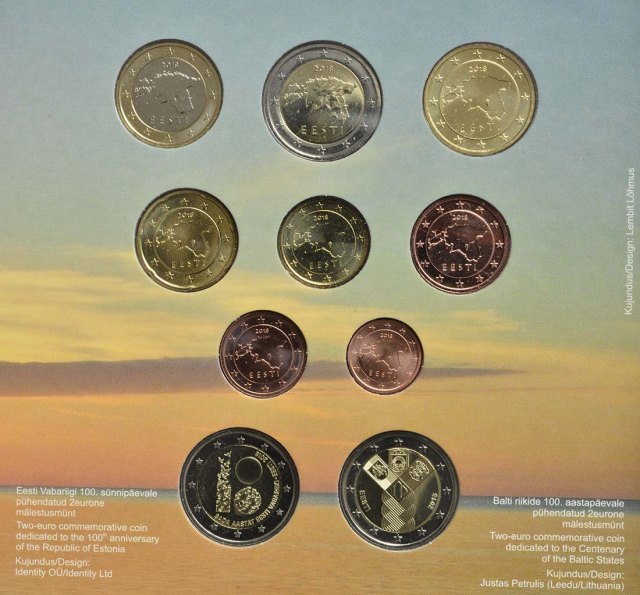
Coin set
5,000
More editions
2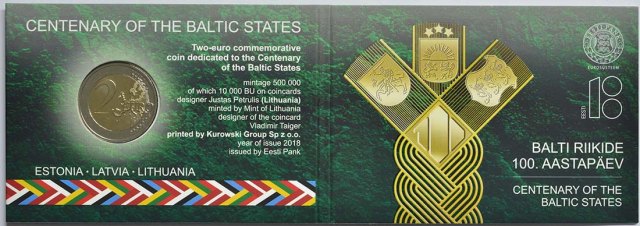

Official issue prices
2018 · Coincard: €10.00
2018 · BU Mint Set: €20.00