
 Deutsch
 English
 Français
 Español
 Italiano
 Nederlands
 Português
 Slovenčina
 Hrvatski
 Slovenščina
 Lietuvių
 Eesti
Eesti Български


CC 293 2017
Blister pack
Proof
Proof blister
Portugal · 150th anniversary of the birth of Raoul Brandão
Mintage2,559
Issue price€19.68
Issue date21 Nov 2017
PackagingBlister pack
Edge lettering5 Wappenschilde + 7 castles, evenly distributed
Market price€16.50
Issue occasion
The coin commemorates the 150th anniversary of the birth of the writer Raul Brandão. The design shows his face, as well as the inscription “RAUL BRANDÃO” and the years “1867” and “2017”. It also features the inscription “PORTUGAL”, the designer’s name “LUIS FILIPE DE ABREU”, and the mint mark “INCM”.
The design
The coin design shows the face of Raul Brandão. On the left side is the inscription “RAUL BRANDÃO”, with the years “1867” and “2017” below it. At the bottom right is the name of the issuing country “PORTUGAL”; at the top right is the name of the designer “LUIS FILIPE DE ABREU” and the mint mark “INCM”.
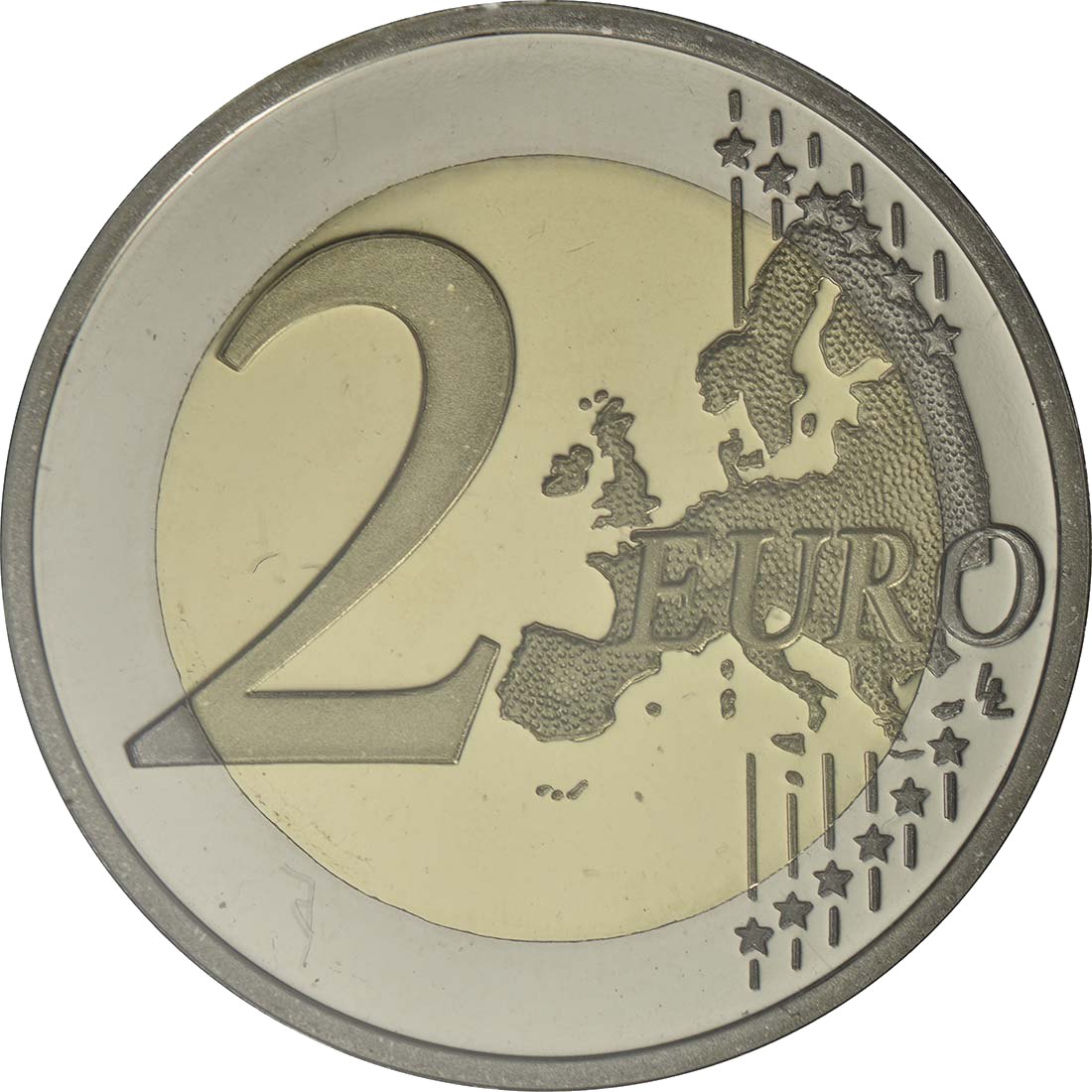
The twelve stars of the European flag are depicted on the coin’s outer ring.
The twelve stars of the European flag are depicted on the coin’s outer ring.
Background on the topic
Raul Brandão came from Foz do Douro near Porto, a place then strongly shaped by fishing and seafaring. He initially pursued a military career, but at the same time worked as a journalist and increasingly turned to literature. Until his death in 1930, he wrote novels, short stories, plays, travel accounts and autobiographical writings.
His work stands at the transition from Naturalism and Symbolism to literary modernism in Portugal. Brandão was particularly interested in people on the margins of society: the poor, fishermen, agricultural workers, failures and those excluded from society. He portrayed their living conditions not only in documentary form. He often combined social observation with internal monologues and reflections on death, fear, loneliness and human identity. His journalistic experience shaped his view of specific social milieus.
Among his best-known books are “Os Pobres”, about the lives of the urban poor, and “Os Pescadores”, which is devoted to Portugal’s coastal population and their working environments. “Húmus” occupies a special position. Published in 1917, the book has no consistently conventional plot, but consists of fragmentary, diary-like reflections on the inhabitants of a provincial town. Through this form, Brandão influenced later Portuguese authors. The year of issue of the coin also coincided with the hundredth anniversary of the first publication of “Húmus”.
Brandão’s multi-volume memoirs are also of interest for Portuguese cultural and contemporary history. In them, he recorded impressions of the political and social changes Portugal experienced from the late 19th century, through the end of the monarchy, and into the period of the Republic.
The choice of the commemorative occasion therefore cannot be explained solely by a milestone birthday. Brandão represents a period in which Portuguese literature turned to new narrative forms and social worlds of everyday life that had previously received little attention. The coin thus places him within Portugal’s official commemoration of writers and other cultural figures.
His work stands at the transition from Naturalism and Symbolism to literary modernism in Portugal. Brandão was particularly interested in people on the margins of society: the poor, fishermen, agricultural workers, failures and those excluded from society. He portrayed their living conditions not only in documentary form. He often combined social observation with internal monologues and reflections on death, fear, loneliness and human identity. His journalistic experience shaped his view of specific social milieus.
Among his best-known books are “Os Pobres”, about the lives of the urban poor, and “Os Pescadores”, which is devoted to Portugal’s coastal population and their working environments. “Húmus” occupies a special position. Published in 1917, the book has no consistently conventional plot, but consists of fragmentary, diary-like reflections on the inhabitants of a provincial town. Through this form, Brandão influenced later Portuguese authors. The year of issue of the coin also coincided with the hundredth anniversary of the first publication of “Húmus”.
Brandão’s multi-volume memoirs are also of interest for Portuguese cultural and contemporary history. In them, he recorded impressions of the political and social changes Portugal experienced from the late 19th century, through the end of the monarchy, and into the period of the Republic.
The choice of the commemorative occasion therefore cannot be explained solely by a milestone birthday. Brandão represents a period in which Portuguese literature turned to new narrative forms and social worlds of everyday life that had previously received little attention. The coin thus places him within Portugal’s official commemoration of writers and other cultural figures.