
 Deutsch
 English
 Français
 Español
 Italiano
 Nederlands
 Português
 Slovenčina
 Hrvatski
 Slovenščina
 Lietuvių
 Eesti
Eesti Български
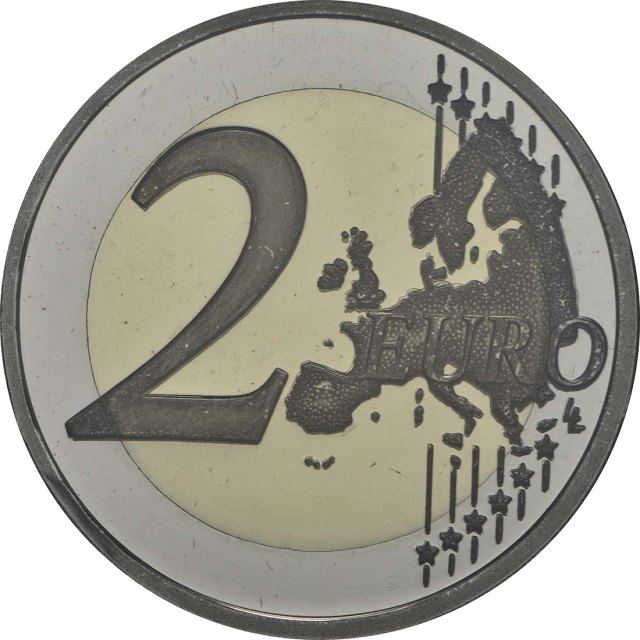
Reverse
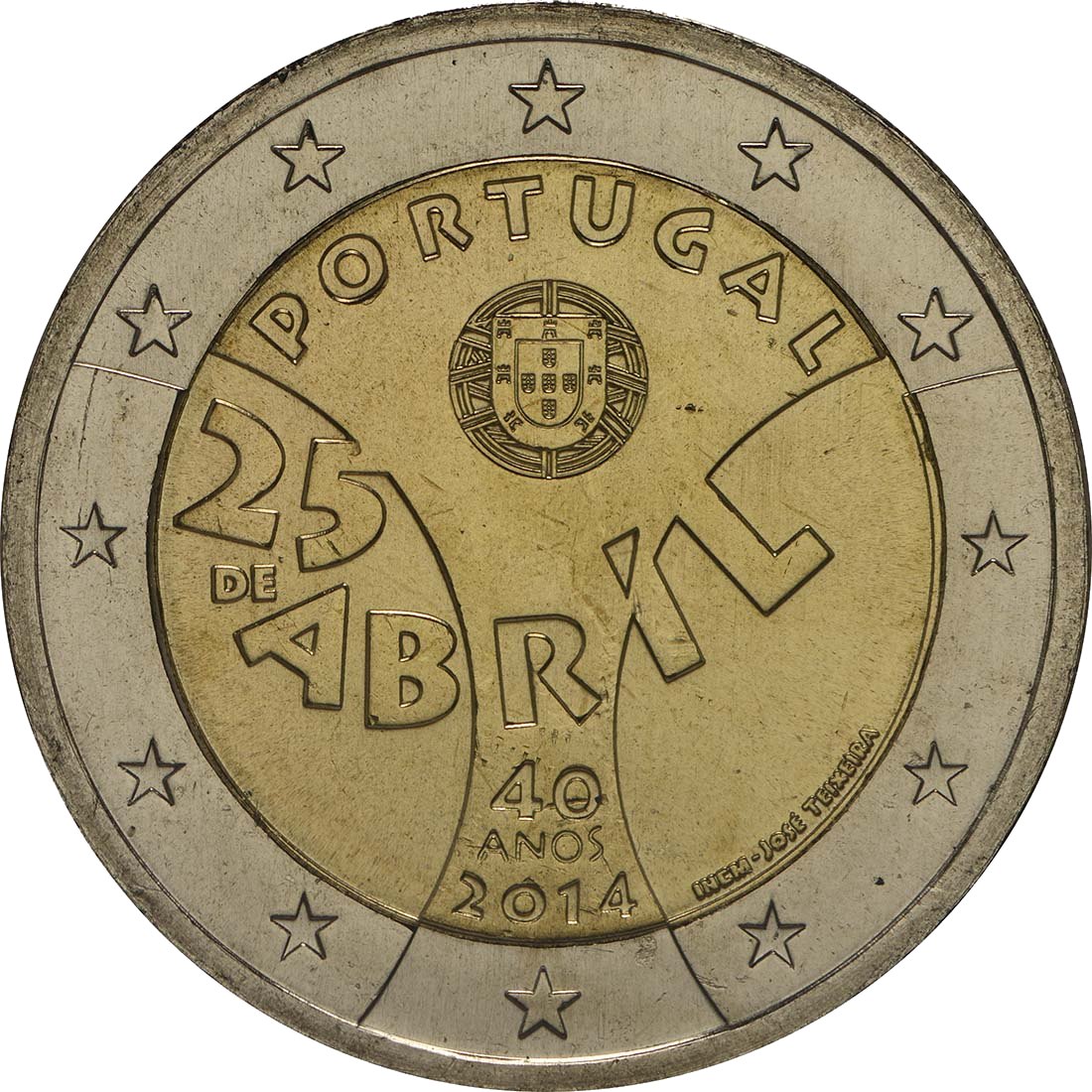
Obverse
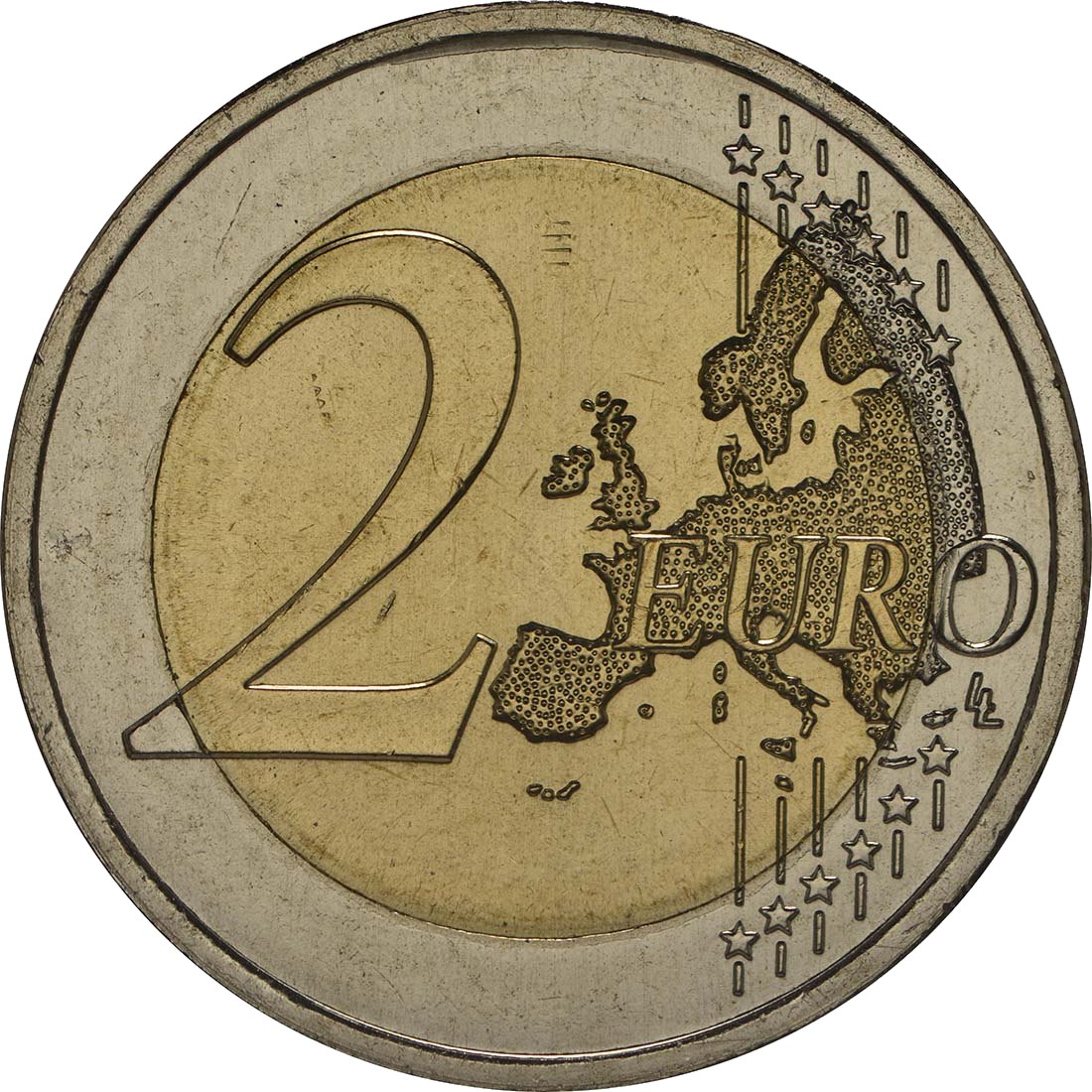
Portugal · 40th anniversary of the Carnation Revolution
Issue date23 Apr 2014
Total mintage510,047
EU maximum500,000
Editions3
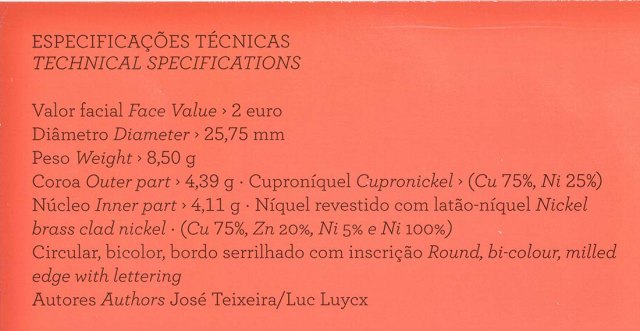
Edge lettering5 Wappenschilde + 7 castles, evenly distributed
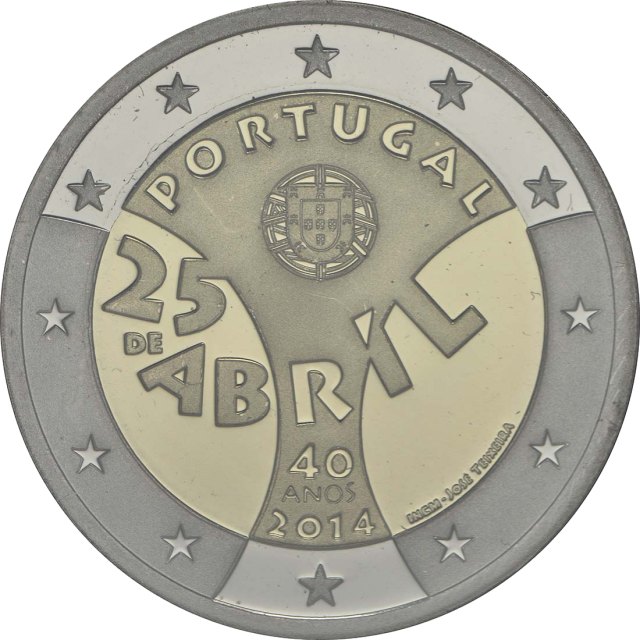
InscriptionPORTUGAL / 25 DE ABRIL / 40 ANOS / 2014
DesignerJosé Teixeira
mintImprensa Nacional Casa da Moeda S.A., Lisboa
Issue occasion
The coin commemorates the 40th anniversary of the Carnation Revolution of 25 April. The design shows two arcs in the outer shape of a carnation, which served as a symbol of the movement and gave the revolution its name, as well as the coat of arms of the state and the inscriptions “PORTUGAL”, “25 DE ABRIL” and “40 ANOS”. The design of the letters and numbers is modelled on posters and political information materials of the time and is intended to symbolise the elation following the revolution.
The design
The two arcs represent the outer shape of a carnation, which served as the symbol of the movement and gave the revolution its name. The name of the issuing country, “PORTUGAL”, and the national coat of arms are engraved along the upper edge of the coin’s inner disc, within the flower. In the centre of the design is the date of the revolution, “25 DE ABRIL” (25 April); below it are the years elapsed since the revolution, “40 ANOS” (40 years), and the year of issue, “2014”. The lettering and numerals are modelled on the posters and other political information materials of 40 years ago, symbolising the euphoria that followed the revolution.
The twelve stars of the European flag are depicted on the coin’s outer ring.
The twelve stars of the European flag are depicted on the coin’s outer ring.
Background on the topic
Portugal was ruled for decades before the revolution by the authoritarian “Estado Novo”. The regime institutionalized in 1933 under António de Oliveira Salazar restricted political parties, elections, freedom of the press and opposition activities. A political police force monitored and persecuted opponents of the regime. After Salazar was replaced in 1968 for health reasons, Prime Minister Marcello Caetano continued the system’s basic structures.
A major catalyst for the coup was Portugal’s colonial wars. Since 1961, Portugal had fought independence movements in Angola, Guinea-Bissau and Mozambique. The long-term deployments consumed a large part of the state budget and led to growing discontent within the armed forces. Younger and mid-ranking officers in particular joined the Movimento das Forças Armadas, the Armed Forces Movement.
During the night of 25 April 1974, units of this movement occupied strategic points in Lisbon and other cities. Previously agreed signals marking the start of the operation were broadcast on the radio. Caetano took refuge in a National Guard barracks and eventually handed over governmental authority. Although the population had been urged to stay at home, large numbers of people gathered in the streets. Civilians placed carnations in the soldiers’ rifle barrels. The coup proceeded with comparatively little violence; members of the political police did, however, fire on demonstrators.
The replacement of the dictatorship was followed by a politically turbulent transitional phase known as the “Revolutionary Process in Progress”. Political parties were legalized, political prisoners were released and censorship was abolished. In 1975, elections were held for a constituent assembly; in 1976, a democratic constitution came into force. At the same time, the colonial wars ended, and most of Portugal’s territories in Africa became independent.
The occasion is suitable for a commemorative coin issued by the state because the coup marked the starting point of Portugal’s present-day democratic order. 25 April is also a public holiday there, celebrated as “Freedom Day”.
A major catalyst for the coup was Portugal’s colonial wars. Since 1961, Portugal had fought independence movements in Angola, Guinea-Bissau and Mozambique. The long-term deployments consumed a large part of the state budget and led to growing discontent within the armed forces. Younger and mid-ranking officers in particular joined the Movimento das Forças Armadas, the Armed Forces Movement.
During the night of 25 April 1974, units of this movement occupied strategic points in Lisbon and other cities. Previously agreed signals marking the start of the operation were broadcast on the radio. Caetano took refuge in a National Guard barracks and eventually handed over governmental authority. Although the population had been urged to stay at home, large numbers of people gathered in the streets. Civilians placed carnations in the soldiers’ rifle barrels. The coup proceeded with comparatively little violence; members of the political police did, however, fire on demonstrators.
The replacement of the dictatorship was followed by a politically turbulent transitional phase known as the “Revolutionary Process in Progress”. Political parties were legalized, political prisoners were released and censorship was abolished. In 1975, elections were held for a constituent assembly; in 1976, a democratic constitution came into force. At the same time, the colonial wars ended, and most of Portugal’s territories in Africa became independent.
The occasion is suitable for a commemorative coin issued by the state because the coup marked the starting point of Portugal’s present-day democratic order. 25 April is also a public holiday there, celebrated as “Freedom Day”.
eBay price analysis
For this issue, there is a price history based on actual eBay sales – with median, range and number of sales
View price analysis2 Euro BU – Single page
- Mintage
- 500,000
- Market price
- €5.50
- Edge lettering
- 5 Wappenschilde + 7 castles, evenly distributed
Mintage by issue type
BU
500,000
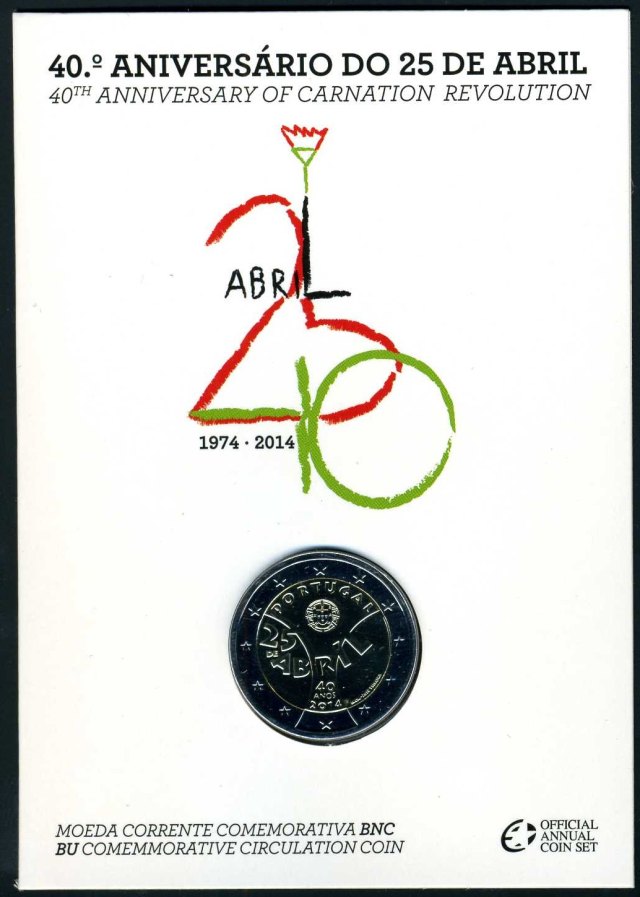
Blister pack
10,047
2 Editions
More editions
2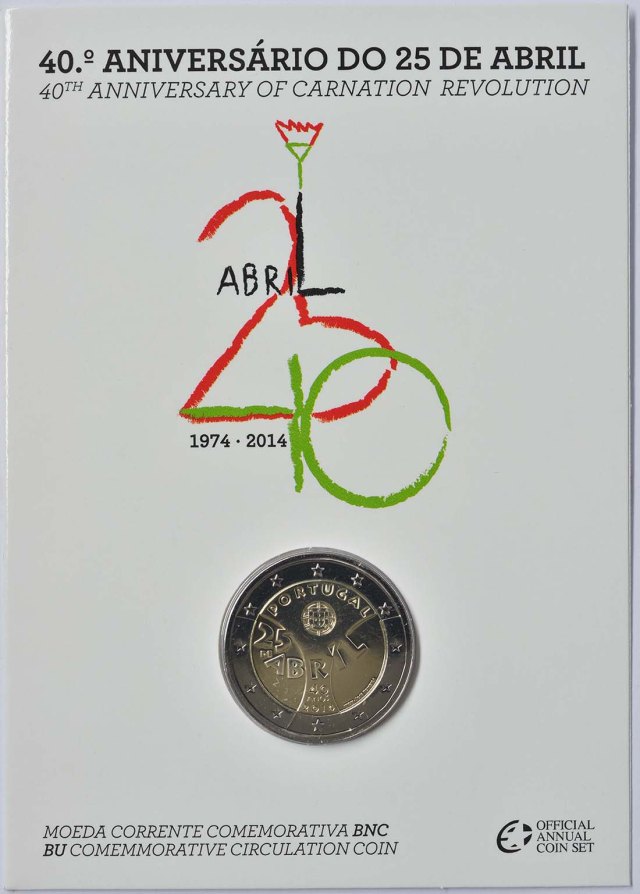
Mintages
Portugal
510,047Circulation: 500,000
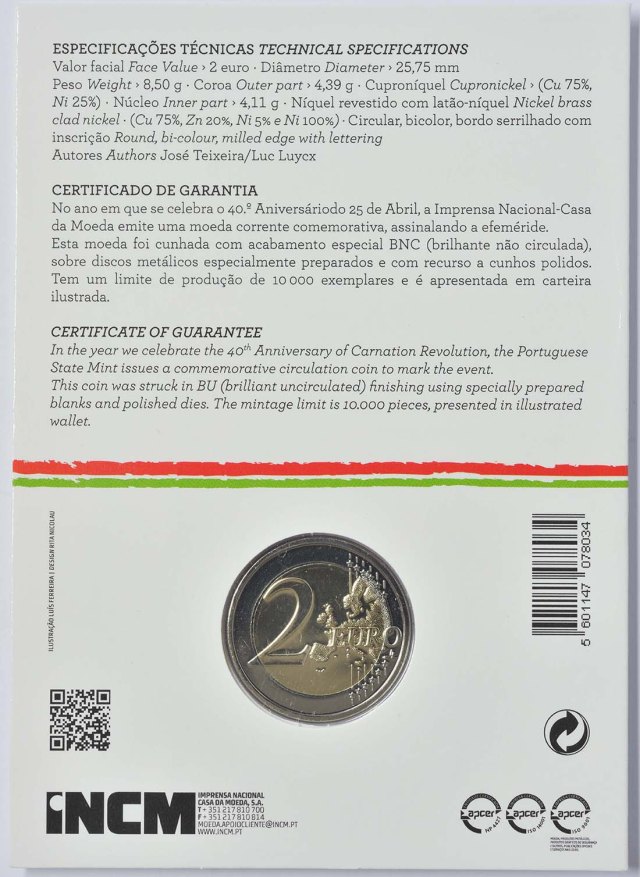
Blister pack BU: 6,014
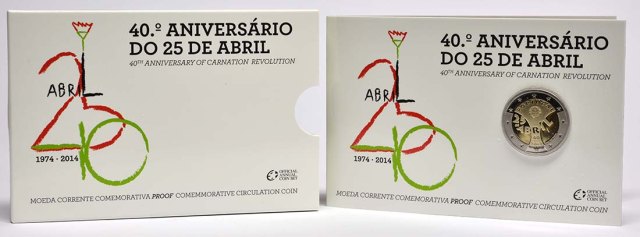
Proof blister: 4,033
Official issue prices
2014 · Coincard: €9.84
2014 · Proof blister: €17.47