
 Deutsch
 English
 Français
 Español
 Italiano
 Nederlands
 Português
 Slovenčina
 Hrvatski
 Slovenščina
 Lietuvių
 Eesti
Eesti Български
Reverse
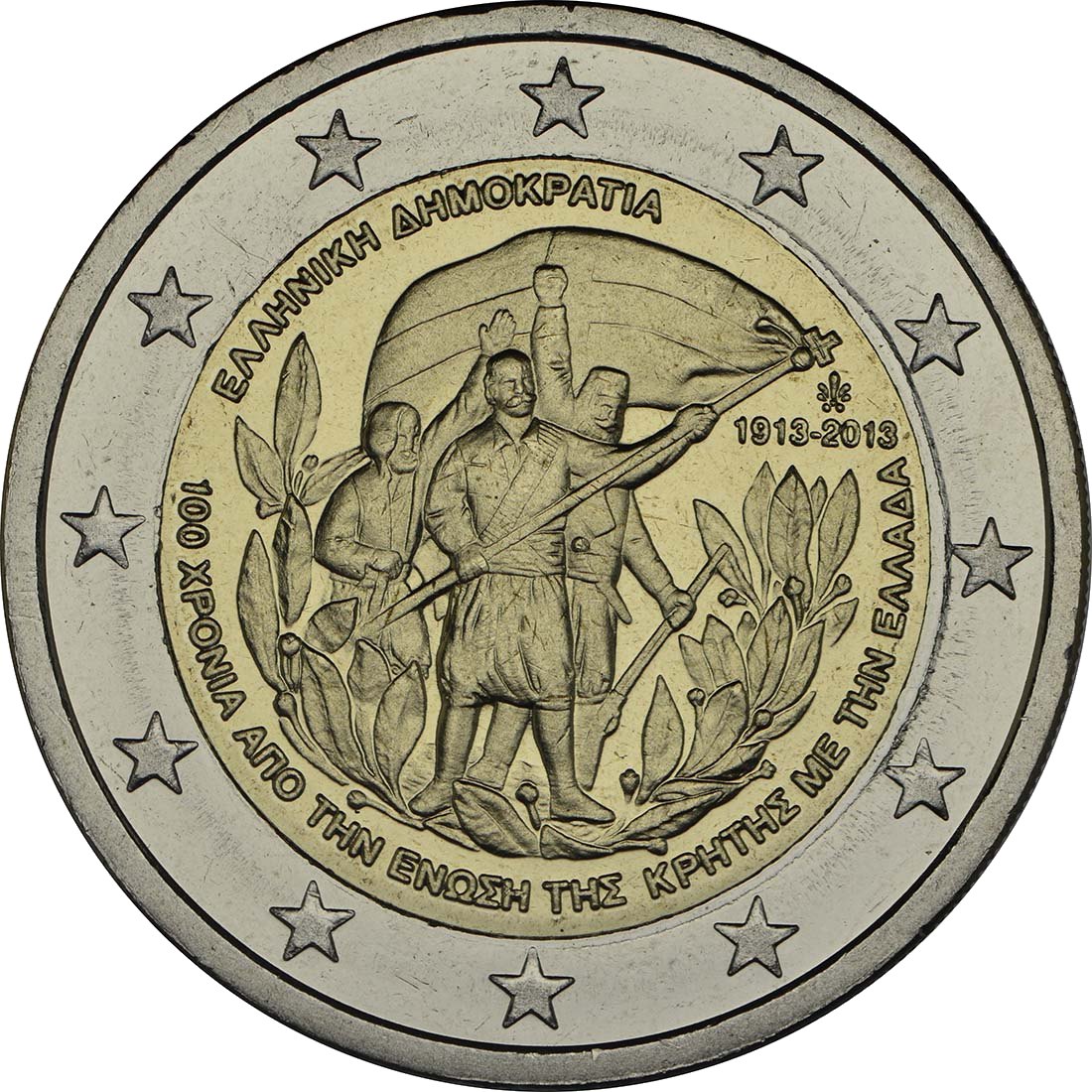
Obverse
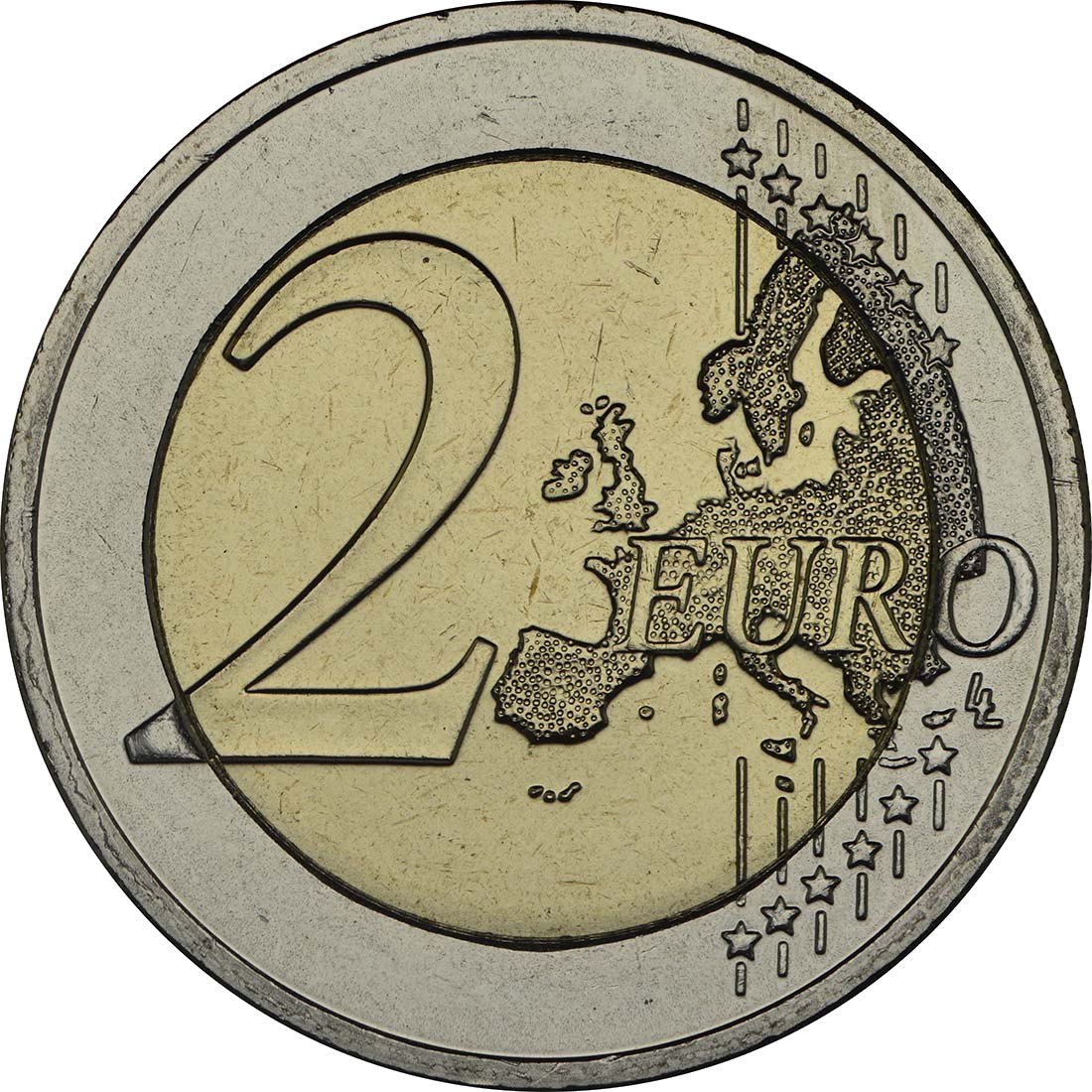
Greece · 100 years of Crete’s union with Greece
Issue date1 Oct 2013
Total mintage754,000
EU maximum750,000
Editions4
Edge letteringΕΛΛΗΝΙΚΗ ΔΗΜΟΚΡΑΤΙΑ + ★
InscriptionΕΛΛΗΝΙΚΗ ΔΗΜΟΚΡΑΤΙΑ / 100 ΧΡΟΝΙΑ ΑΠΟ ΤΗΝ ΕΝΩΣΗ ΤΗΣ ΚΡΗΤΗΣ ΜΕ ΤΗΝ ΕΛΛΑΔΑ / 1913-2013 / ΣΤΑΜ
DesignerGeorgios Stamatopoulos
mintBank of Greece - Mint, Halandri
Issue occasion
The coin commemorates the 100th anniversary of the union of Crete with Greece. The design depicts Cretan rebels raising the Greek flag as a symbol of Crete’s struggle for union. It is complemented by the Greek inscriptions “Hellenic Republic (Hellenische Republik)” and “100 years of the union of Crete with Greece”, as well as the years “1913–2013”.
The design
The coin’s inner part depicts Cretan rebels raising the Greek flag, a symbolic representation of Crete’s struggle for union with Greece. In the upper part, the name of the issuing state, “Hellenic Republic”, is shown in Greek, in capital letters arranged in a semicircle; below it, “100 years of the union of Crete with Greece” is inscribed in Greek. To the right are “1913-2013” and the monogram of the Greek Mint, as well as the initials “ΣΤΑΜ” (monogram of the engraver G. Stamatopoulos).
The outer ring of the coin depicts the twelve stars of the European flag.
The outer ring of the coin depicts the twelve stars of the European flag.
Background on the topic
Crete had been under Ottoman rule since the conquest of Candia, present-day Iraklio, in 1669. The island’s predominantly Greek-speaking and Orthodox population participated in the Greek War of Independence, but Crete did not become part of the Greek state established in the 1830s. Over the course of the 19th century, repeated uprisings took place. In the process, demands for political and religious rights increasingly became linked to the aim of “Enosis”, the political union with Greece.
Following another uprising and the Greek-Ottoman War of 1897, the European great powers intervened. In 1898, the autonomous Cretan State (Kretischer Staat) was established. It formally remained under the suzerainty of the Ottoman Sultan, but had its own government and administration. Prince George of Greece was appointed High Commissioner. However, the autonomy arrangement did not end the political struggle. In 1905, Eleftherios Venizelos, who later became Greek prime minister several times, led the Theriso revolt against the government of the High Commissioner. It called for political reforms and closer ties with Greece.
In 1908, the Cretan people’s assembly unilaterally declared union with Greece. The Greek government and the great powers initially avoided formal recognition in order to prevent a new conflict with the Ottoman Empire. It was not until the Balkan Wars of 1912 and 1913 that the political circumstances changed. In the subsequent peace settlements, the Ottoman Empire relinquished its claims to Crete.
On 1 December 1913, the Greek flag was raised in an official ceremony at Firkas Fortress in the port of Chania. Those present included King Constantine I and Prime Minister Venizelos. The choice of the theme in 2013 thus referred to a clearly datable conclusion to a decades-long political process. At the same time, the anniversary commemorated the formation of the Greek territory in connection with the collapse of Ottoman rule in the Balkans.
Following another uprising and the Greek-Ottoman War of 1897, the European great powers intervened. In 1898, the autonomous Cretan State (Kretischer Staat) was established. It formally remained under the suzerainty of the Ottoman Sultan, but had its own government and administration. Prince George of Greece was appointed High Commissioner. However, the autonomy arrangement did not end the political struggle. In 1905, Eleftherios Venizelos, who later became Greek prime minister several times, led the Theriso revolt against the government of the High Commissioner. It called for political reforms and closer ties with Greece.
In 1908, the Cretan people’s assembly unilaterally declared union with Greece. The Greek government and the great powers initially avoided formal recognition in order to prevent a new conflict with the Ottoman Empire. It was not until the Balkan Wars of 1912 and 1913 that the political circumstances changed. In the subsequent peace settlements, the Ottoman Empire relinquished its claims to Crete.
On 1 December 1913, the Greek flag was raised in an official ceremony at Firkas Fortress in the port of Chania. Those present included King Constantine I and Prime Minister Venizelos. The choice of the theme in 2013 thus referred to a clearly datable conclusion to a decades-long political process. At the same time, the anniversary commemorated the formation of the Greek territory in connection with the collapse of Ottoman rule in the Balkans.
eBay price analysis
For this issue, there is a price history based on actual eBay sales – with median, range and number of sales
View price analysis2 Euro BU – Single page
- Mintage
- 737,500
- Market price
- €7.23
- Edge lettering
- ΕΛΛΗΝΙΚΗ ΔΗΜΟΚΡΑΤΙΑ + ★
Mintage by issue type
BU
737,500
Coincard
7,500
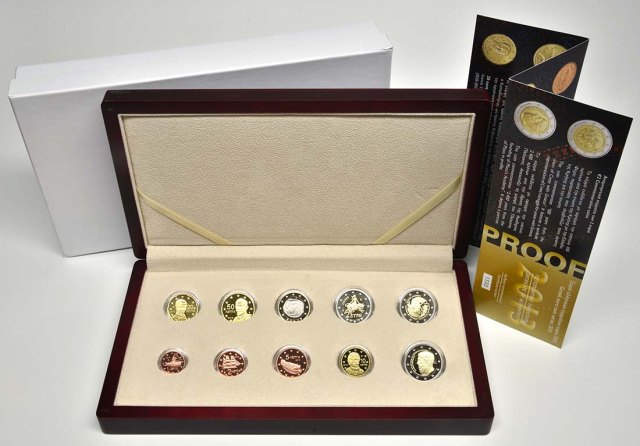
Coin set
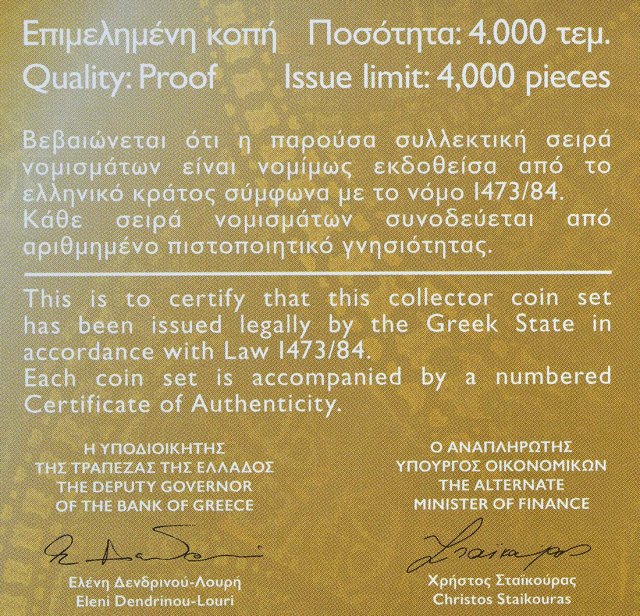
4,000
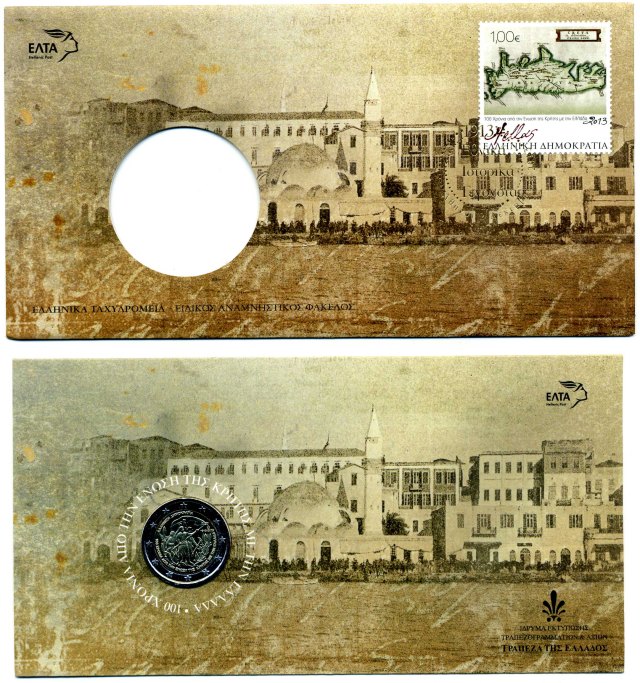
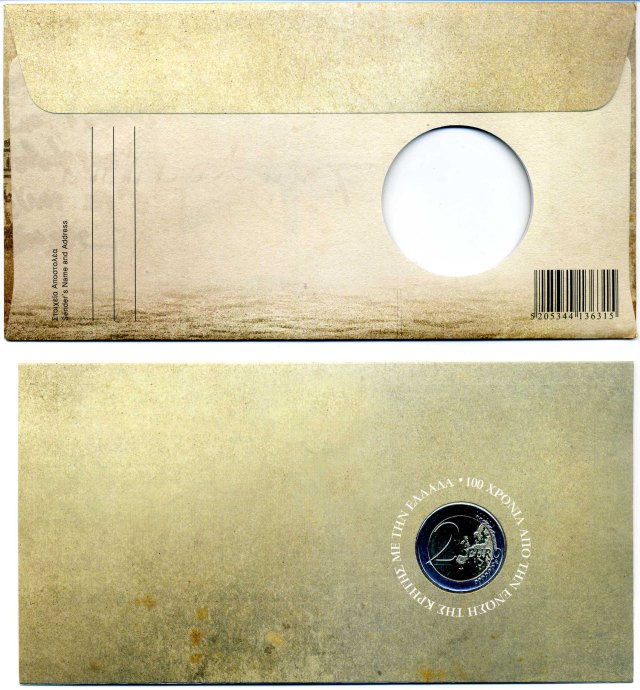
Numismatic cover
5,000
More editions
3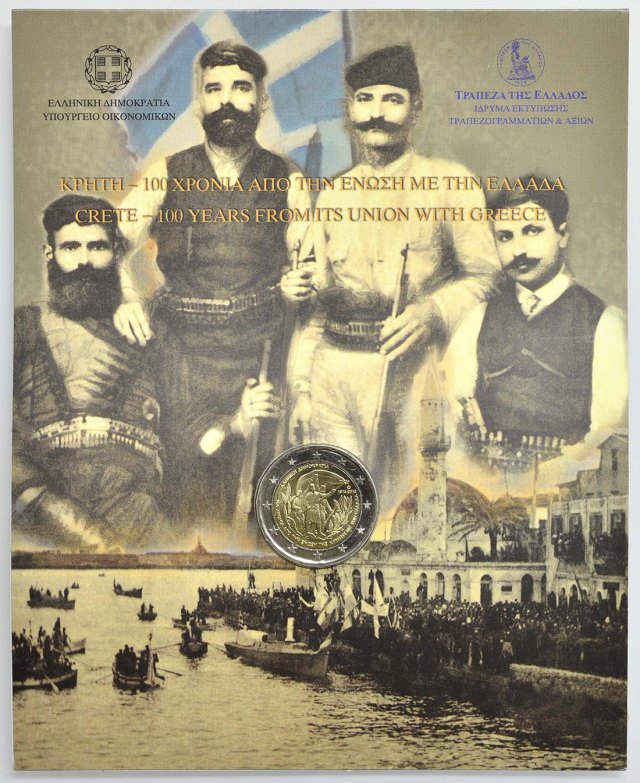
Official issue prices
2013 · Coincard: €5.00
2013 · Coin set proof: €90.00
2013 · Numismatic cover: €6.10