
 Deutsch
 English
 Français
 Español
 Italiano
 Nederlands
 Português
 Slovenčina
 Hrvatski
 Slovenščina
 Lietuvių
 Eesti
Eesti Български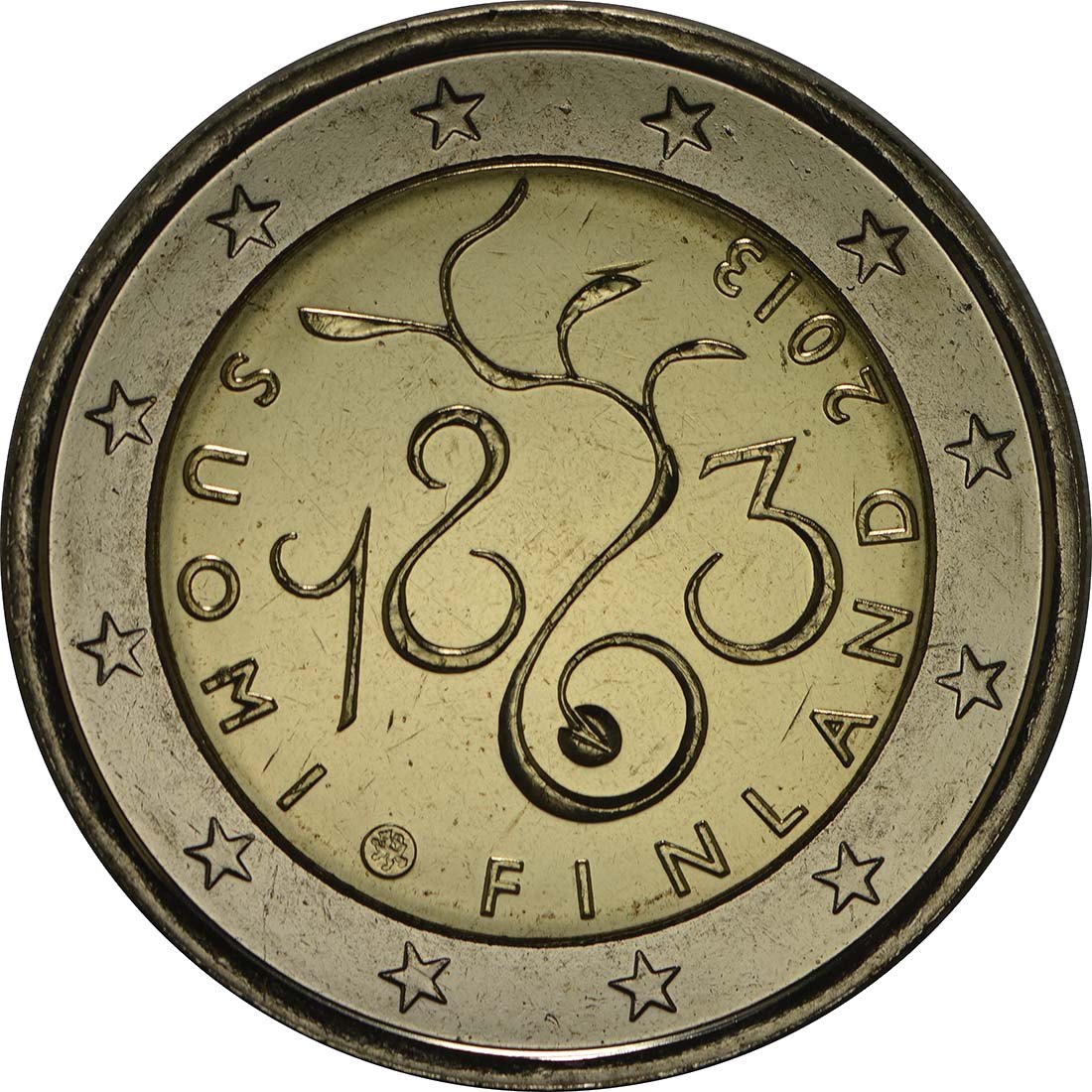
CC 149 2013
2 euro coin
BU Main coin Bank issue
2 Euro BU
Finland · The Landtag of 1863
Mintage977,000
Issue date4 Sept 2013
Edge letteringSUOMI FINLAND + 3 lion heads
Market price€6.12
Issue occasion
The coin commemorates the 150th anniversary of the convening of the Diet of Finland (Reichstag) in 1863, which marked the beginning of genuine democracy and greater political participation in Finland. At the centre is the year 1863, with the digit 6 designed as a sprouting plant tendril, symbolising the new beginning of democracy and development. Below it, in a semicircle, is the inscription “SUOMI FINLAND”, separated by the mintmark and year.
The design
On the 2-euro commemorative coin, the year 1863 is depicted in the centre, with the 6 representing a straight, budding plant tendril—symbolising the new beginning of democracy and development in Finland. The name of the issuing country, “SUOMI FINLAND”, is inscribed in a semicircle at the bottom; the two country names are separated by the mint mark and the year “2013”.
The convening of the Diet in 1863 ushered in a period of “enlightenment”. In Finland, 1863 marked the beginning of genuine democracy, transparent press operations and the right to use the Finnish language. With the convening of regular sessions of the Diet, Finns’ opportunities to influence affairs in their country improved in an unprecedented manner. That year, the star of Finnish democracy rose.
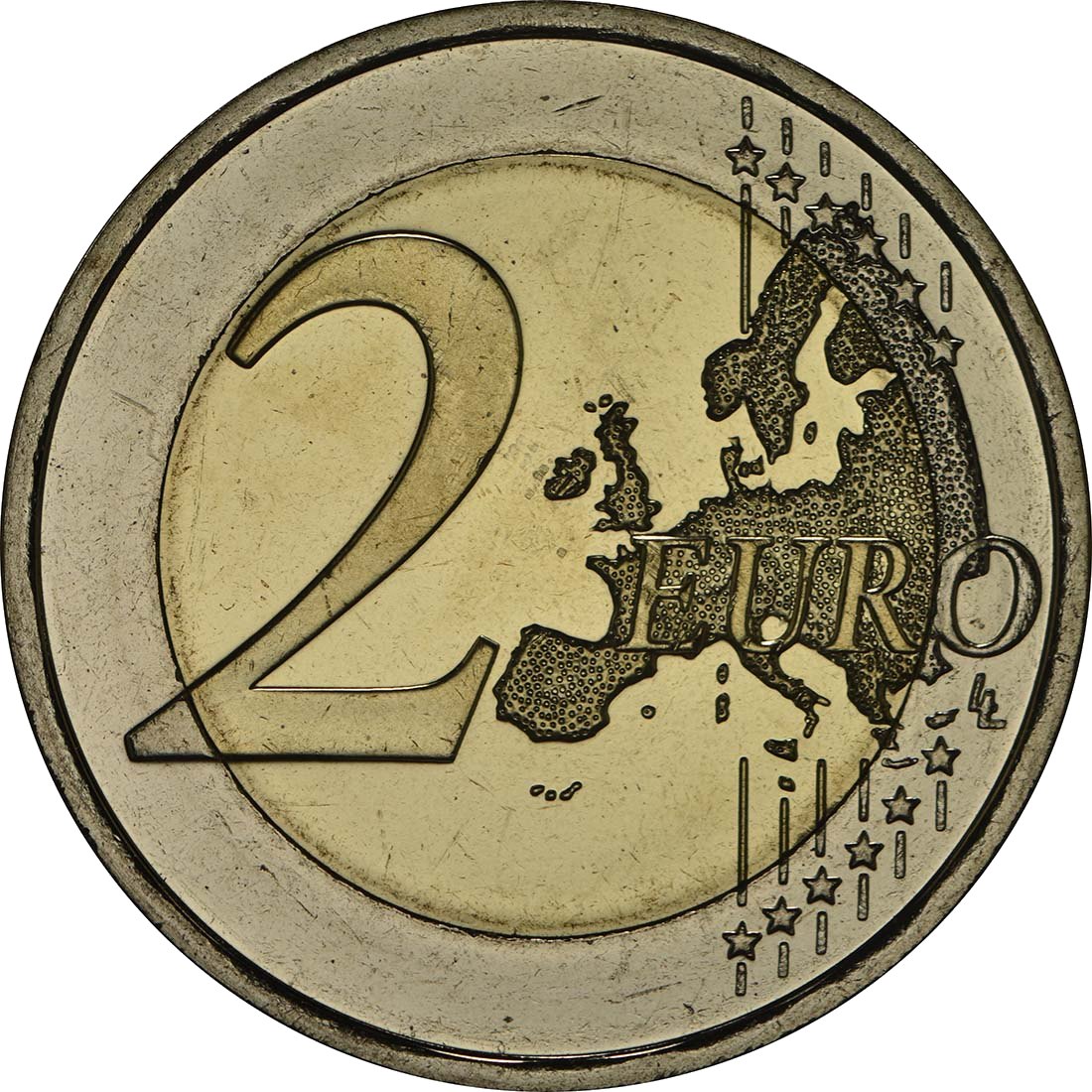
The twelve stars of the European flag are depicted on the coin’s outer ring.
The convening of the Diet in 1863 ushered in a period of “enlightenment”. In Finland, 1863 marked the beginning of genuine democracy, transparent press operations and the right to use the Finnish language. With the convening of regular sessions of the Diet, Finns’ opportunities to influence affairs in their country improved in an unprecedented manner. That year, the star of Finnish democracy rose.
The twelve stars of the European flag are depicted on the coin’s outer ring.
Background on the topic
In 1863, Finland was not an independent state but had been an autonomous Grand Duchy within the Russian Empire since 1809. The Russian emperor also ruled as Grand Duke of Finland. The country retained its own administration, legislative tradition and legal system, but the Finnish estates were not convened again for more than five decades after the Diet of Porvoo in 1809. Political decisions therefore lay largely with the emperor and the Finnish Senate.
Alexander II finally summoned the estates to Helsinki in 1863. The “Diet” of that time was not yet a parliament in the modern sense. It consisted of four estates that met separately: the nobility, the clergy, the burghers and the peasantry. Large sections of the population were not directly represented. Legislative proposals generally originated with the ruler; the estates deliberated, among other things, on laws, taxes and economic matters. Nevertheless, this created an institutional framework in which representatives of Finnish society participated in legislation and could publicly discuss grievances and political concerns.
The resumption of the assemblies of the estates initiated more regular parliamentary activity. A new Diet Act later stipulated that the estates should meet at fixed intervals. This led to the development of a political public sphere in which parties, associations and newspapers increasingly gained influence. Also in 1863, Alexander II issued a language ordinance intended to gradually expand the use of Finnish in administration and the judiciary. This was connected with the Finnish national movement and the effort to strengthen the position of the Finnish-speaking majority in relation to Swedish, which had predominated until then.
Despite these changes, the Diet of the Estates remained socially limited. It was not until the parliamentary reform of 1906 that it was replaced by a unicameral parliament based on universal and equal suffrage. Women received both the right to vote and the right to stand for election. The convocation of 1863 is therefore regarded above all as the starting point of a development that led from participation by the estates to the modern Finnish Parliament. The round anniversary provided an occasion to commemorate this institutional new beginning.
Alexander II finally summoned the estates to Helsinki in 1863. The “Diet” of that time was not yet a parliament in the modern sense. It consisted of four estates that met separately: the nobility, the clergy, the burghers and the peasantry. Large sections of the population were not directly represented. Legislative proposals generally originated with the ruler; the estates deliberated, among other things, on laws, taxes and economic matters. Nevertheless, this created an institutional framework in which representatives of Finnish society participated in legislation and could publicly discuss grievances and political concerns.
The resumption of the assemblies of the estates initiated more regular parliamentary activity. A new Diet Act later stipulated that the estates should meet at fixed intervals. This led to the development of a political public sphere in which parties, associations and newspapers increasingly gained influence. Also in 1863, Alexander II issued a language ordinance intended to gradually expand the use of Finnish in administration and the judiciary. This was connected with the Finnish national movement and the effort to strengthen the position of the Finnish-speaking majority in relation to Swedish, which had predominated until then.
Despite these changes, the Diet of the Estates remained socially limited. It was not until the parliamentary reform of 1906 that it was replaced by a unicameral parliament based on universal and equal suffrage. Women received both the right to vote and the right to stand for election. The convocation of 1863 is therefore regarded above all as the starting point of a development that led from participation by the estates to the modern Finnish Parliament. The round anniversary provided an occasion to commemorate this institutional new beginning.
eBay price analysis
For this issue, there is a price history based on actual eBay sales – with median, range and number of sales
View price analysis