Issue date2 Jul 2024
Total mintage200,000
EU maximum200,000
Editions3
Edge letteringO LIJEPA O DRAGA O SLATKA SLOBODO
InscriptionHRVATSKA / 2024 / STARI GRAD VARAŽDIN
DesignerStjepan Divković
mintCroatian Mint, Svetonedeljska cesta 2, 10 431 Sveta Nedelja
Issue occasion
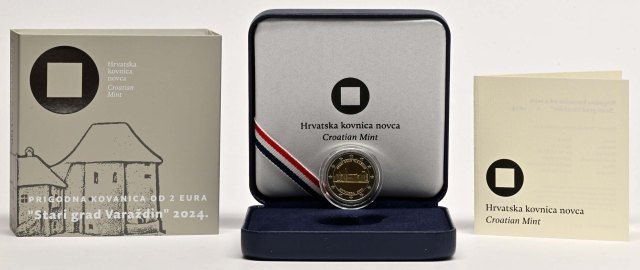
The commemorative coin is dedicated to the fortress of Varaždin, Stari Grad Varaždin. The design depicts the fortress complex built between the 12th and 16th centuries, which developed from a medieval moated castle into an important fortress and armoury of the Slavonian Military Frontier and subsequently into a Renaissance castle. The inscriptions read “HRVATSKA” and “STARI GRAD VARAŽDIN”.
The design
The fortress of Varaždin (12th–16th century) is depicted on the coin. Varaždin was first mentioned in 1181. Following the brutal attack by the Tatars in 1242, it was expanded into a royal fortress and henceforth bore the name Stari Grad. The appearance of Varaždin changed over the centuries: Originally built as a mighty medieval castle surrounded by moats, it developed into the most important fortress and armoury of the Slavonian Military Frontier and the army’s main base in Varaždin, until it was eventually expanded into a picturesque Renaissance castle. Today, the fortress complex is the most significant and fascinating structure in the city of Varaždin and, as part of Croatia’s architectural heritage, has the status of a monument of the highest category.
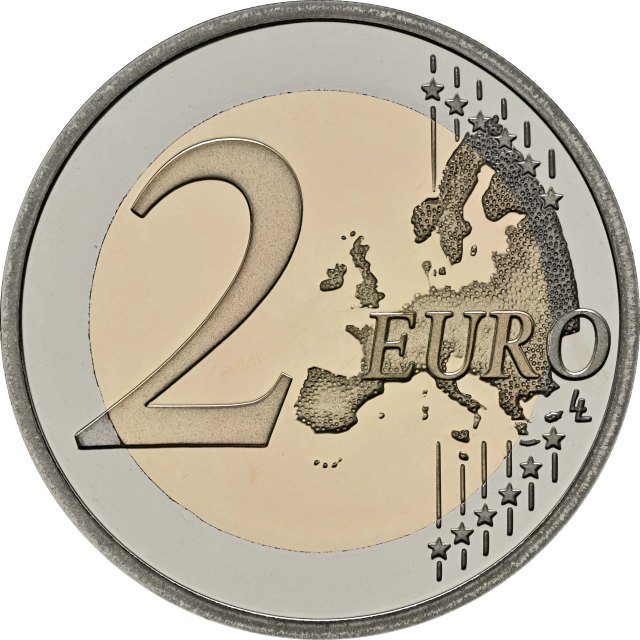
The name of the issuing country, “HRVATSKA” (Croatia), the year of issue, “2024”, and the inscription “STARI GRAD VARAŽDIN” (Varaždin Fortress) are also depicted in a circular arrangement along the upper and lower edges of the coin design. The outer ring of the coin features the twelve stars of the European flag.
Background on the topic
Varaždin is located in northwestern Croatia near the Drava and developed into a center of trade and administration as early as the Middle Ages. In 1209, King Andreas II granted the settlement the rights of a royal free city. This gave the citizens, among other things, their own administrative and judicial rights. For a long time, however, the city and the castle formed separate legal and territorial jurisdictions: while the citizens’ city was directly subordinate to the king, the fortress was at times owned by various noble families.
Its owners included the Counts of Celje and later the Ungnad and Erdődy families. Under these noble castle lords, the complex served not only military purposes but also as a representative residence. For several generations, the Erdődy family was closely associated with the office of the Gespan, that is, the head of Varaždin County. This connection between seat of power, administration and defence shaped the history of the complex.
The Slavonian Military Frontier was part of the Habsburg defence system against the Ottoman Empire. It consisted of fortified settlements, garrisons and militarily organised border districts. Although Varaždin lay behind the actual frontier line, as the seat of a Generalate it performed important leadership and supply functions. The fortress was therefore integrated into an extensive political and military system.
Varaždin also temporarily held a central political function outside the fortress. In the 18th century, the Croatian Ban and the Royal Council were based there. After a major city fire in 1776, central authorities were relocated to Zagreb.
Since 1925, the Stari Grad has housed the Varaždin City Museum. Its collections document, among other things, the domestic culture, crafts and history of the city. The EU Official Journal does not mention a specific anniversary and does not explain the selection procedure. The choice of the motif can therefore primarily be understood as a depiction of a building in which the city’s history, noble rule, frontier defence and present-day museum use come together.
- Mintage
- 50,000
- Market price
- €9.89
- Edge lettering
- O LIJEPA O DRAGA O SLATKA SLOBODO
Mintage by issue type
BU
50,000
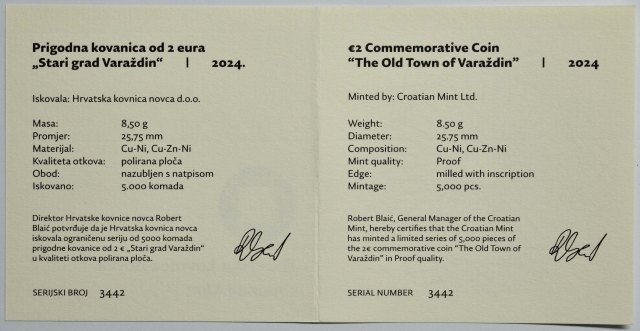
Proof
5,000
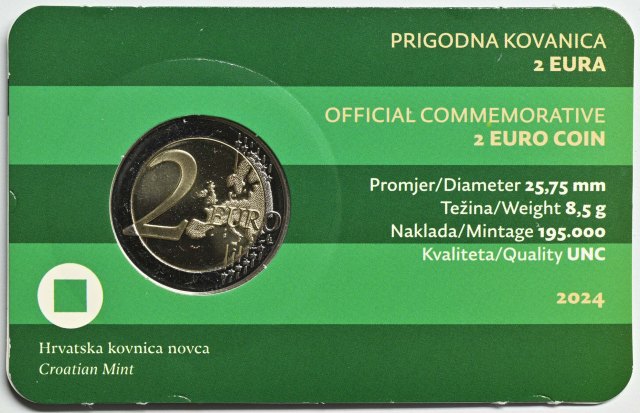
Coincard
145,000
 Deutsch
 English
 Français
 Español
 Italiano
 Nederlands
 Português
 Slovenčina
 Hrvatski
 Slovenščina
 Lietuvių
 Eesti
Eesti Български