
 Deutsch
 English
 Français
 Español
 Italiano
 Nederlands
 Português
 Slovenčina
 Hrvatski
 Slovenščina
 Lietuvių
 Eesti
Eesti Български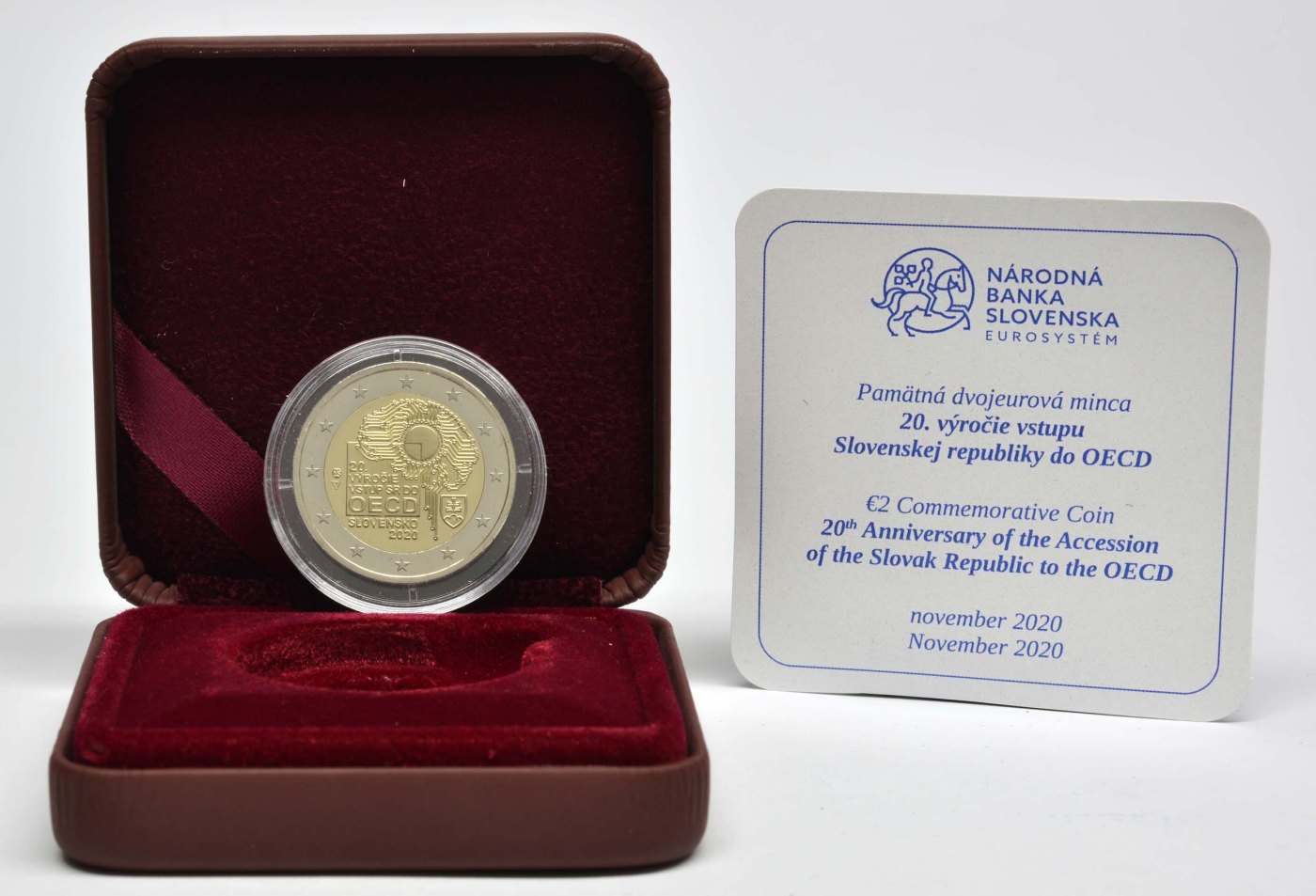
CC 390 2020
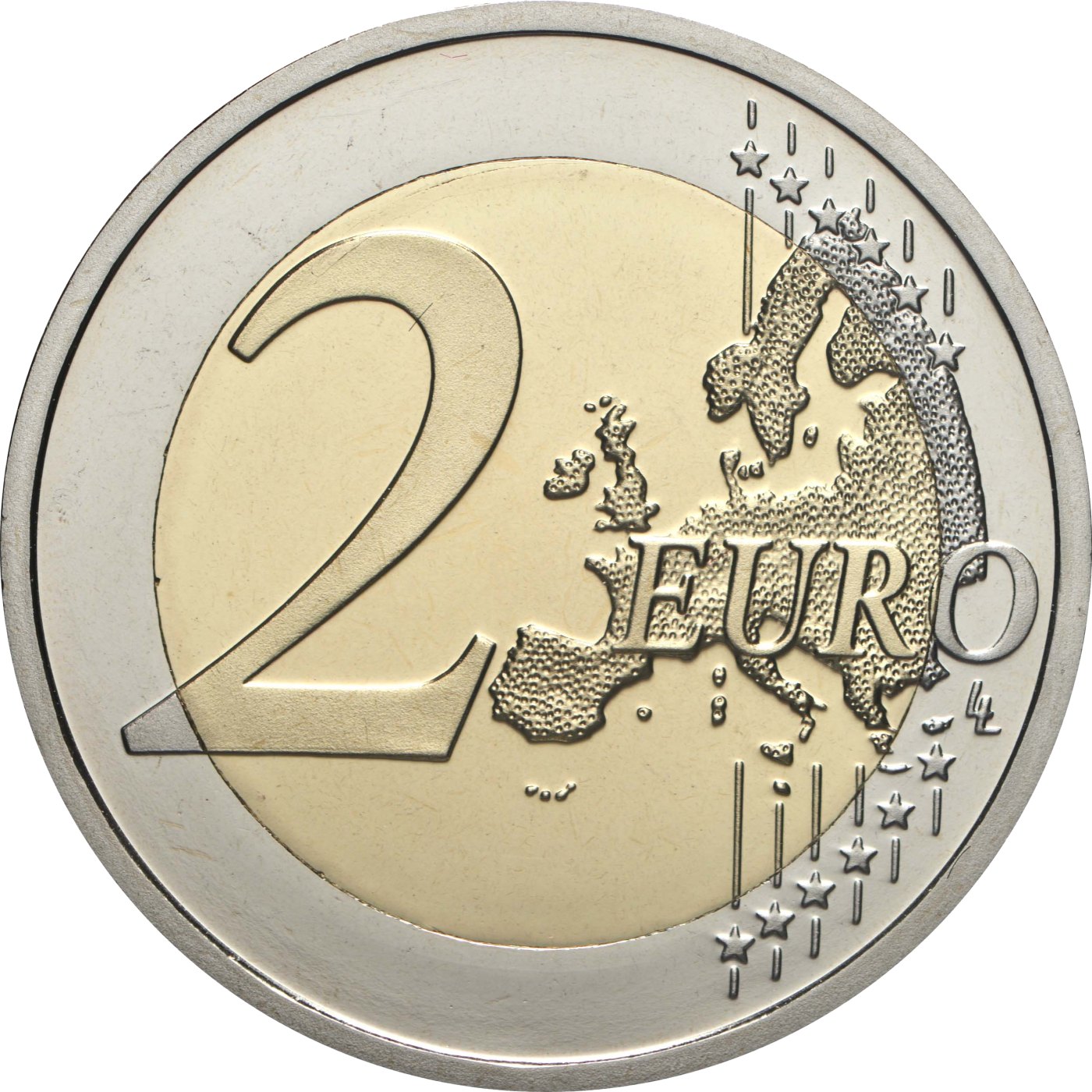
2 euro coin
Proof
2 Euro Proof
Slovakia · 20th anniversary of accession to the OECD
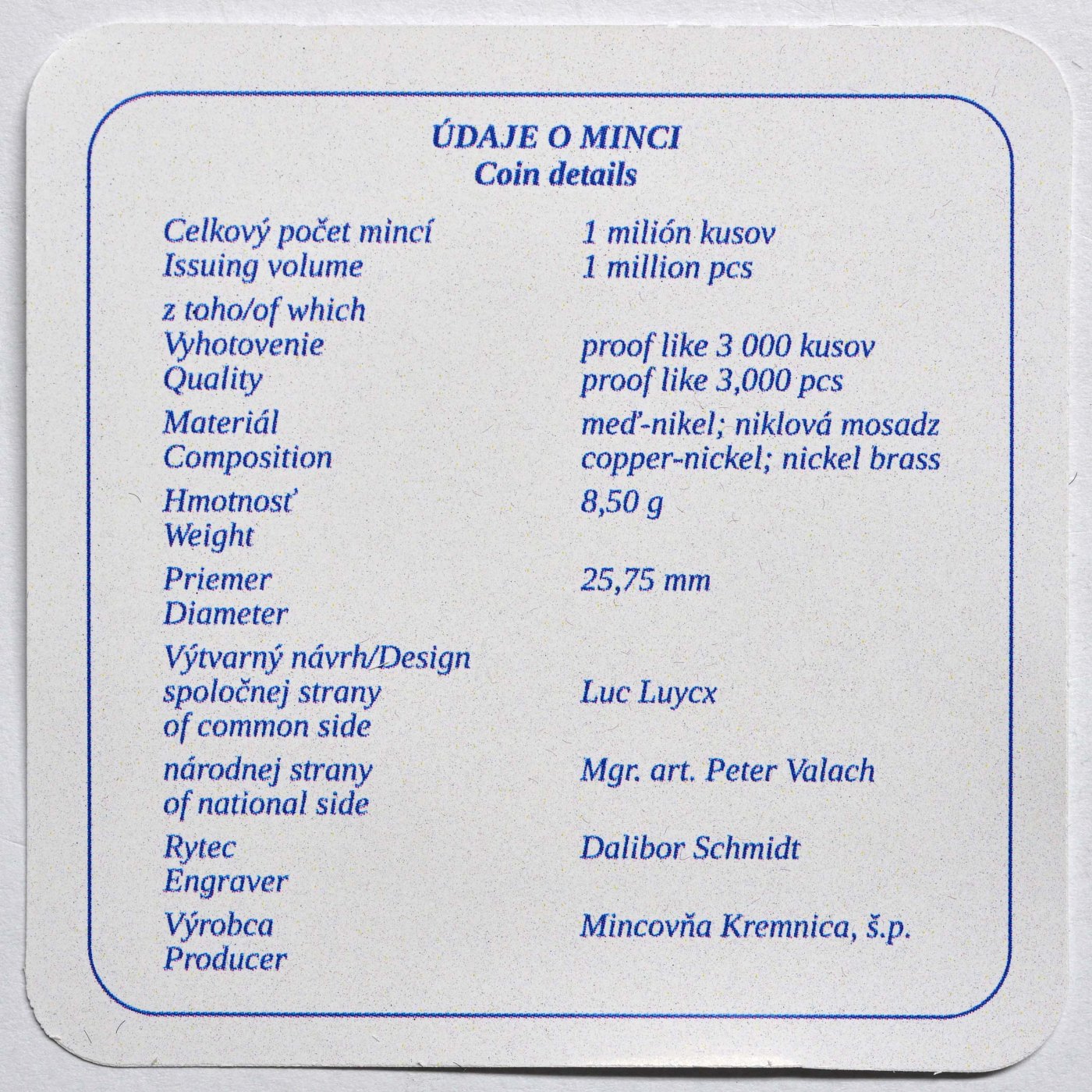
Mintage2,000
Issue date9 Nov 2020
Packagingin case
Edge letteringSLOVENSKÁ REPUBLIKA + ★ + Linden leaf + ★
Market price€529.00
Issue occasion
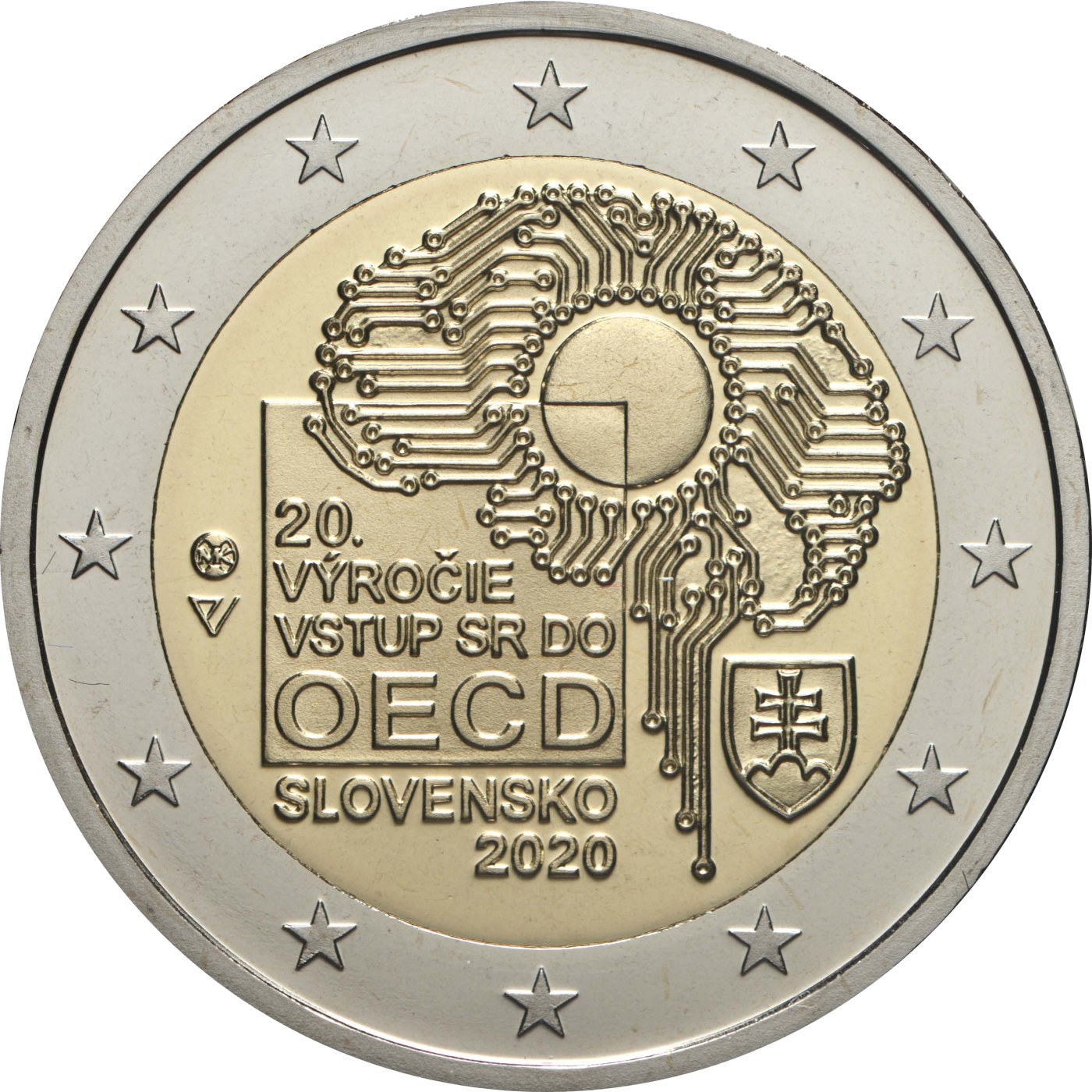
The coin commemorates the 20th anniversary of Slovakia’s accession to the Organisation for Economic Co-operation and Development (OECD). The design symbolises digital humanism through printed circuits in the shape of a human brain and a central circle symbolising a microprocessor. The Slovak coat of arms and the inscriptions “20. VÝROČIE”, “VSTUP SR DO OECD” and “SLOVENSKO” are also shown.
The design
The upper right half of the national side figuratively depicts the concept of digital humanism: printed circuits in the shape of a human brain, with a circle in the centre symbolising a microprocessor. The coat of arms of Slovakia is located at the lower right edge. A square outline, partially overlapping the main image, contains the words “20. VÝROČIE” and “VSTUP SR DO OECD” (20th anniversary of Slovakia’s accession to the OECD). Below the square, the name of the issuing country, “SLOVENSKO”, and the year of issue, “2020”, are arranged one below the other. Between the square and the left edge of the design, the “MK” mark of the Kremnica Mint (Mincovňa Kremnica) can be seen between two minting marks. Below the mintmark are the stylised initials “PV” of the designer Peter Valach.
The twelve stars of the European flag are depicted on the coin’s outer ring.
The twelve stars of the European flag are depicted on the coin’s outer ring.
Background on the topic
The Organisation for Economic Co-operation and Development (Organisation für wirtschaftliche Zusammenarbeit und Entwicklung) was established in 1961 as the successor to the Organisation for European Economic Co-operation, which had overseen the implementation of the Marshall Plan (Marshallplan) after the Second World War. The OECD is not a supranational body like the European Union (Europäische Union). Rather, it serves its member states as a forum for comparing government policies, developing common standards and conducting peer reviews. Its areas of work include economic, tax, education, environmental and social policy, as well as responsible corporate governance.
Slovakia was admitted to the OECD as its 30th member on 14 December 2000. The accession was linked to the political and economic reorganisation following the end of communist rule in Czechoslovakia (Tschechoslowakei) in 1989 and the establishment of the independent Slovak Republic (Slowakische Republik) in 1993. The country transformed its centrally planned economy into a market economy and aligned numerous state regulations with international standards. As part of the accession process, OECD bodies examined, among other things, the economic system, financial markets, public administration and the treatment of foreign investment.
Membership was part of Slovakia’s stronger integration into Western institutions. It took place before accession to the European Union (Europäische Union) and NATO in 2004. Within the OECD, Slovakia has since participated in policy comparisons and review procedures. This includes, for example, the international student assessment study PISA, which is coordinated by the OECD.
The technological reference in the design is linked to a more recent area of the organisation’s work. The OECD addresses the economic and social consequences of digitalisation, including artificial intelligence, data protection, changes in the labour market and digital taxation. In doing so, it connects the use of technological systems with principles based on the rule of law and human concerns.
The round anniversary therefore provided an occasion not only to commemorate the formal accession, but also to address current cooperation within the OECD. For Slovakia, admission marked a step in its international political and economic integration following state independence.
Slovakia was admitted to the OECD as its 30th member on 14 December 2000. The accession was linked to the political and economic reorganisation following the end of communist rule in Czechoslovakia (Tschechoslowakei) in 1989 and the establishment of the independent Slovak Republic (Slowakische Republik) in 1993. The country transformed its centrally planned economy into a market economy and aligned numerous state regulations with international standards. As part of the accession process, OECD bodies examined, among other things, the economic system, financial markets, public administration and the treatment of foreign investment.
Membership was part of Slovakia’s stronger integration into Western institutions. It took place before accession to the European Union (Europäische Union) and NATO in 2004. Within the OECD, Slovakia has since participated in policy comparisons and review procedures. This includes, for example, the international student assessment study PISA, which is coordinated by the OECD.
The technological reference in the design is linked to a more recent area of the organisation’s work. The OECD addresses the economic and social consequences of digitalisation, including artificial intelligence, data protection, changes in the labour market and digital taxation. In doing so, it connects the use of technological systems with principles based on the rule of law and human concerns.
The round anniversary therefore provided an occasion not only to commemorate the formal accession, but also to address current cooperation within the OECD. For Slovakia, admission marked a step in its international political and economic integration following state independence.