
 Deutsch
 English
 Français
 Español
 Italiano
 Nederlands
 Português
 Slovenčina
 Hrvatski
 Slovenščina
 Lietuvių
 Eesti
Eesti Български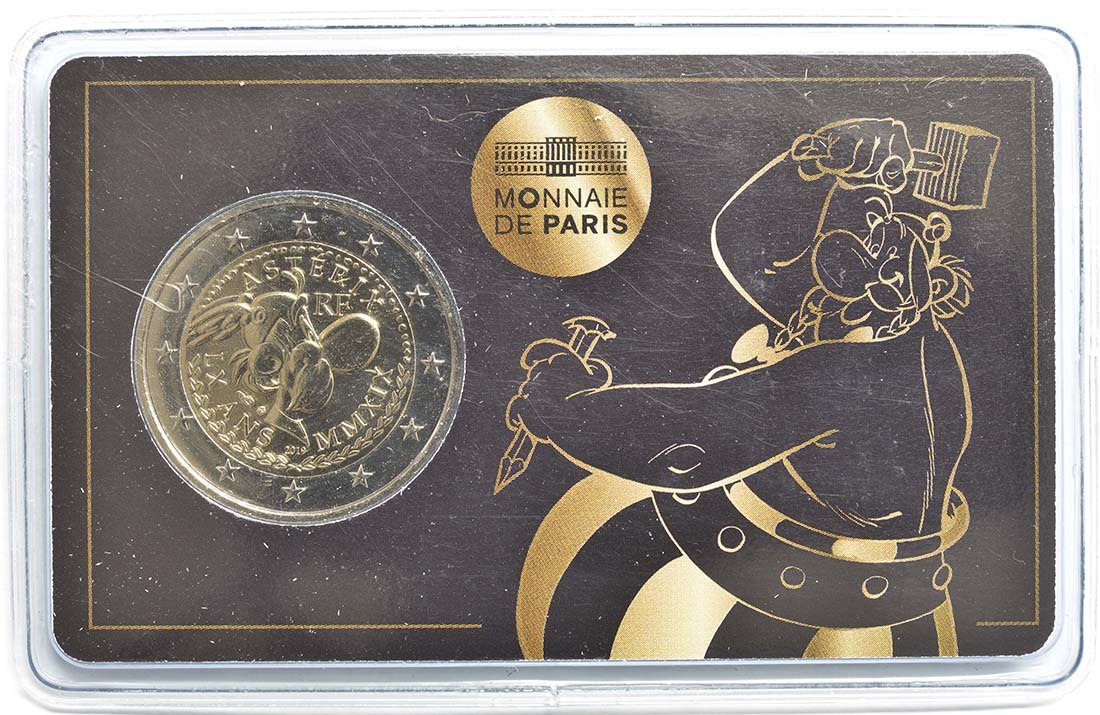


CC 347 2019
Coincard
BU
Coincard – Issue 3
France · 60th birthday of Asterix
Mintage100,000
Issue date7 Jun 2019
PackagingCoincard
Edge lettering2 ★ ★ × 6, alternating upright/inverted
Market price€79.00
Mintage information from source: 3 x 100.000
Issue occasion
The coin commemorates the 60th anniversary of the comic character Asterix, created in 1959 by René Goscinny and Albert Uderzo. The design shows Asterix in profile with his winged helmet, surrounded by laurel and Roman inscriptions marking his 60th birthday. “ASTERIX” is inscribed above, and “RF” for “République Française” below.
The design
For 60 years, Asterix has been a true symbol of French culture. He was created in 1959 by scriptwriter René Goscinny and cartoonist Albert Uderzo and, as the embodiment of the Gaul, represents the Frenchman with his intelligence and wit. Apart from the artistic aspect, Asterix has also been internationally famous for many years due to his humorous portrayal of modern society. Since his creation, he has been translated into all the languages of the European Union and is very popular. Asterix is, for example, as well known in Germany as in France. He has also been known for many years in the United Kingdom, the Netherlands, Spain, Portugal, Italy and Scandinavia. Beyond being a French character, Asterix has become a symbol of European comics.
The design depicts “Asterix” in profile wearing his famous winged helmet. He is surrounded by laurel and Roman inscriptions referring to his 60th birthday. The inscription “ASTERIX” is at the top, with the designation of the issuing country “RF” (“République Française”) below it. The year of issue “2019” is shown at the bottom together with the French mintmark and mintmaster mark.
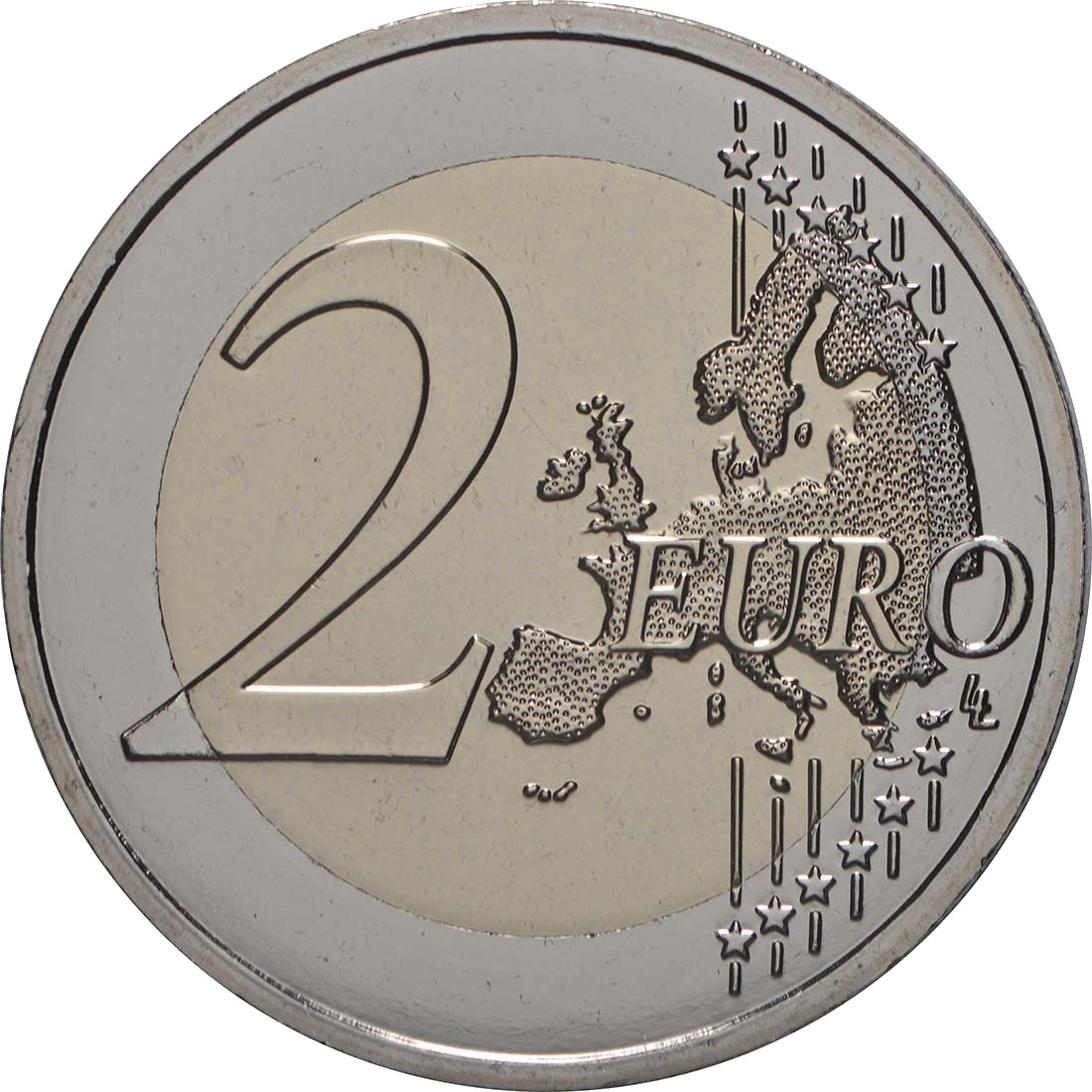
The outer coin ring features the twelve stars of the European flag.
The design depicts “Asterix” in profile wearing his famous winged helmet. He is surrounded by laurel and Roman inscriptions referring to his 60th birthday. The inscription “ASTERIX” is at the top, with the designation of the issuing country “RF” (“République Française”) below it. The year of issue “2019” is shown at the bottom together with the French mintmark and mintmaster mark.
The outer coin ring features the twelve stars of the European flag.
Background on the topic
Asterix first appeared in the inaugural issue of the French youth magazine “Pilote”. The stories are set around 50 BC, after the conquest of Gaul by Julius Caesar. At the centre is a fictional village on the Armorican coast that resists Roman rule. Its inhabitants owe their strength to a magic potion brewed by the druid Miraculix. Asterix usually resolves conflicts through ingenuity, while his friend Obelix, who fell into the cauldron of magic potion as a child, represents physical strength.
The series draws on historical names, locations and events, but does not claim historical accuracy. The Roman Empire and the various ancient peoples instead provide the framework for wordplay, caricatures and allusions to the present. The characters travel, among other places, to Britannia, Hispania, Helvetia and Egypt. National characteristics are deliberately exaggerated. Latin expressions, bureaucratic procedures, politics, advertising and modern everyday habits are also parodied.
The division of labour between the two creators was initially clear: Goscinny wrote the scenarios and dialogue, while Uderzo drew the stories. After Goscinny’s death in 1977, Uderzo continued the series alone. Other authors and artists took over later. In addition to the albums, animated and live-action films, radio plays, games and a French theme park were produced. The translations played a significant role in the series’ dissemination, with wordplay and regional speech patterns often adapted to the respective target language. In German, Gudrun Penndorf initially shaped the linguistic style.
The choice of Asterix for a French commemorative coin can be explained by the character’s long-standing presence in French and European everyday life. Asterix combines a popular image of the Gallic past with modern satire. The round anniversary therefore gave France an occasion to honour a comic character on a French 2-euro commemorative coin for the first time.
The series draws on historical names, locations and events, but does not claim historical accuracy. The Roman Empire and the various ancient peoples instead provide the framework for wordplay, caricatures and allusions to the present. The characters travel, among other places, to Britannia, Hispania, Helvetia and Egypt. National characteristics are deliberately exaggerated. Latin expressions, bureaucratic procedures, politics, advertising and modern everyday habits are also parodied.
The division of labour between the two creators was initially clear: Goscinny wrote the scenarios and dialogue, while Uderzo drew the stories. After Goscinny’s death in 1977, Uderzo continued the series alone. Other authors and artists took over later. In addition to the albums, animated and live-action films, radio plays, games and a French theme park were produced. The translations played a significant role in the series’ dissemination, with wordplay and regional speech patterns often adapted to the respective target language. In German, Gudrun Penndorf initially shaped the linguistic style.
The choice of Asterix for a French commemorative coin can be explained by the character’s long-standing presence in French and European everyday life. Asterix combines a popular image of the Gallic past with modern satire. The round anniversary therefore gave France an occasion to honour a comic character on a French 2-euro commemorative coin for the first time.